
Suzy Welch Core Values Quiz
Ask yourself what you care about, and the answer arrives before you finish asking. This test looks at what you would actually do in everyday scenes instead, and hands you one image of the value your choices lean toward. It takes about six minutes. It’s a self-report of today’s answers: a friendly mirror, not a verdict.
No sign-up. Your result right away.

Open Road
«You read the signposts, then take the side road anyway.»
The test is new — you are among the first hundred to take it.
Someone hands you the agreed plan for Saturday, each time and place filled in. You read it, nod, and by ten you've rerouted the afternoon, delighted with the detour. Your choices consistently lean toward your own judgment and your own course.
The price is consistency: anything that needs you to stay put or follow an agreed plan can wobble when a new road appears. Whether your days leave room to steer right now is another question; here you only see the pull when you choose freely.
Feeling boxed in by other people's calendars is where this pull chafes. A detour is your route with better views.
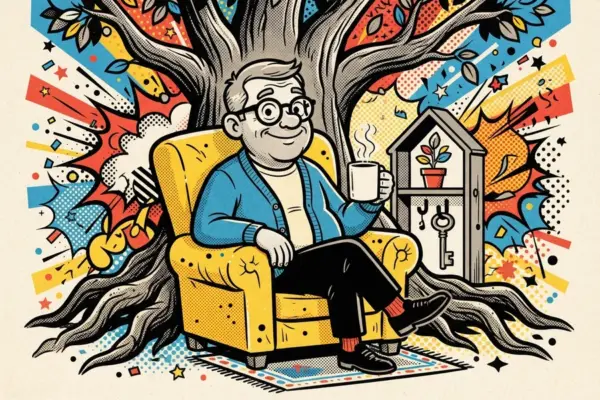
Deep Roots
«You keep the good thing going until it says otherwise.»
The test is new — you are among the first hundred to take it.
Same bakery, same seat, same key on the same hook. A friend suggests somewhere new for Friday and you ask what's on the menu and how parking works. Your choices consistently lean toward predictability and a settled footing.
The price: your exciting but uncertain options can lose even when the risk would have paid off, and the familiar can outstay its welcome.
Whether your life is steady right now is another question; here you only see the pull when you choose freely. Change you didn't choose can leave you feeling exposed, even though you value steadiness. Where others see a rut, you see a floor.

Gold Cup
«A good day leaves something you can point to.»
The test is new — you are among the first hundred to take it.
It's Sunday night and you read the week back like a scoreboard: tax form sent, shelf hung, garage emptied. The ticked list feels warm. Your choices consistently lean toward visible results and getting things done.
The scoreboard has no row for people or unplanned care, so they can slide down the list, though you wouldn't choose that on purpose. Whether you're winning by your own measure right now is another question; here you only see the pull when you choose freely. A full calendar and a clean task list can still leave you unsure you've tended the people around you.
Finished things are a language you speak fluently.

Warm Blanket
«Before you decide, you ask who it will touch.»
The test is new — you are among the first hundred to take it.
A friend mentions a hard week and your Saturday quietly rearranges itself: soup on the stove, a spare blanket in the car. Nobody asked. Your choices consistently lean toward what serves the people closest to you.
Your own plans can end up second in line, postponed until they start to look like hobbies. Whether those relationships are thriving right now is another question; here you only see the pull when you choose freely.
When someone close needs a hand, yours is already open.

Sprinkler Day
«If it feels good now, you're already there.»
The test is new — you are among the first hundred to take it.
The sprinkler is on, the ice cream is melting, and somebody asks whether you'll join. You're already barefoot. Nobody has to explain why the sensible plan can wait till Monday. Your choices consistently lean toward enjoying the moment you're in.
A bigger payoff waiting down the road can keep losing to whatever feels good today, even when a clear-headed you would have chosen otherwise.
Whether your life has room for enjoyment right now is another question; here you only see the pull when you choose freely. Who said the good part has to wait?
About this test
How this test works
Psychologists have studied personal values for decades and describe them as a compact handful of broad life orientations. A dictionary definition of a value is the place to start. Separate research suggests that well-being follows how closely day-to-day picks line up with what a person holds dear.
This test covers five orientations: your own judgment and course, visible results, enjoyment in the present, a predictable and secure footing, and the wellbeing of those nearest you. Each is scored on its own scale, not against an opposite, which gives a profile across five scales instead of one flat number. The result names the one that leads your answers. An encyclopedia overview of the theory behind such value sets, including how they are measured shows how such constructs are handled.
The limits are plain. What people value moves as their lives change, so the result mirrors your answers today and is no permanent tag. It is a self-report with no clinical claims, it squeezes a rich picture of your values into a single prominent area, and it ranks nothing else you care about.
It rests on openly published research, it costs nothing, and it uses five everyday areas instead of a private, trademarked vocabulary. It is also independent work. It borrows none of the wording of any paid values quiz you may have met elsewhere, nobody connected with those products had a hand in it, and it does not try to copy, replace or check itself against one.
Frequently asked questions
How can I tell which values drive my choices?
Look for the choice pattern that repeats. A values test puts options side by side and watches which pull keeps winning, and this one names the leaning that shows up consistently in your own answers. It does not rank every value a person can hold, and it says nothing about whether that leaning is visible in your life today.
Why does my life look good but feel off?
Many people know this gap: from the outside everything is in order, yet the days don't line up with what they care about. It is common and not a malfunction. Research on well-being points in the same direction, since people tend to feel better when everyday decisions follow their own values instead of someone else's expectations.
How do I put my values in order when I can't do it all?
Limits are what reveal priorities. When two good things compete for the same hour or the same resource, the one you keep is the heavier one. The test builds those competitions in, setting options against each other across different parts of everyday life, and that is the part that does the sorting.
Do the things I value change as life moves on?
Yes. New stages of life, new responsibilities and new circumstances all move what pulls hardest. Your result describes how you answer today and is not a fixed label, so if you take the test again months or years from now, expect the result to shift.
Is this the same as the paid values assessments I've heard about?
No. This is a free test that stands on its own, grounded in public studies. It shares no vocabulary with any paid values assessment you may have come across in the press, in short videos or on podcasts, nobody behind those products helped make it, and it does not set out to copy, stand in for or double-check them.
Sources
- Schwartz, S. H. (2012). An Overview of the Schwartz Theory of Basic Values. Online Readings in Psychology and Culture, 2(1). doi:10.9707/2307-0919.1116
- Rokeach, M. (1973). The Nature of Human Values. New York: Free Press.
- Sheldon, K. M., & Elliot, A. J. (1999). Goal Striving, Need Satisfaction, and Longitudinal Well-Being: The Self-Concordance Model. Journal of Personality and Social Psychology, 76(3), 482–497. doi:10.1037/0022-3514.76.3.482
Three more tests on the same theme



Breakdown
There's a reason you answer the way you do
Most tests show you a slice of who you are. This one gets to the core: the classic 16-type personality test that goes back to Carl Jung, rebuilt from the ground up and way more accurate. It takes ten minutes, you only ever do it once — and you walk away with an answer most people never quite figure out: why you are the way you are. Why some people just get you, and why with others it's complicated. And that answer won't change: your type is yours for life.
Take the free testHow you compare
The test is new — you are among the first hundred to take it.
Three more tests on the same theme
About this test
How this test works
Psychologists have studied personal values for decades and describe them as a compact handful of broad life orientations. A dictionary definition of a value is the place to start. Separate research suggests that well-being follows how closely day-to-day picks line up with what a person holds dear.
This test covers five orientations: your own judgment and course, visible results, enjoyment in the present, a predictable and secure footing, and the wellbeing of those nearest you. Each is scored on its own scale, not against an opposite, which gives a profile across five scales instead of one flat number. The result names the one that leads your answers. An encyclopedia overview of the theory behind such value sets, including how they are measured shows how such constructs are handled.
The limits are plain. What people value moves as their lives change, so the result mirrors your answers today and is no permanent tag. It is a self-report with no clinical claims, it squeezes a rich picture of your values into a single prominent area, and it ranks nothing else you care about.
It rests on openly published research, it costs nothing, and it uses five everyday areas instead of a private, trademarked vocabulary. It is also independent work. It borrows none of the wording of any paid values quiz you may have met elsewhere, nobody connected with those products had a hand in it, and it does not try to copy, replace or check itself against one.
Frequently asked questions
How can I tell which values drive my choices?
Look for the choice pattern that repeats. A values test puts options side by side and watches which pull keeps winning, and this one names the leaning that shows up consistently in your own answers. It does not rank every value a person can hold, and it says nothing about whether that leaning is visible in your life today.
Why does my life look good but feel off?
Many people know this gap: from the outside everything is in order, yet the days don't line up with what they care about. It is common and not a malfunction. Research on well-being points in the same direction, since people tend to feel better when everyday decisions follow their own values instead of someone else's expectations.
How do I put my values in order when I can't do it all?
Limits are what reveal priorities. When two good things compete for the same hour or the same resource, the one you keep is the heavier one. The test builds those competitions in, setting options against each other across different parts of everyday life, and that is the part that does the sorting.
Do the things I value change as life moves on?
Yes. New stages of life, new responsibilities and new circumstances all move what pulls hardest. Your result describes how you answer today and is not a fixed label, so if you take the test again months or years from now, expect the result to shift.
Is this the same as the paid values assessments I've heard about?
No. This is a free test that stands on its own, grounded in public studies. It shares no vocabulary with any paid values assessment you may have come across in the press, in short videos or on podcasts, nobody behind those products helped make it, and it does not set out to copy, stand in for or double-check them.
Sources
- Schwartz, S. H. (2012). An Overview of the Schwartz Theory of Basic Values. Online Readings in Psychology and Culture, 2(1). doi:10.9707/2307-0919.1116
- Rokeach, M. (1973). The Nature of Human Values. New York: Free Press.
- Sheldon, K. M., & Elliot, A. J. (1999). Goal Striving, Need Satisfaction, and Longitudinal Well-Being: The Self-Concordance Model. Journal of Personality and Social Psychology, 76(3), 482–497. doi:10.1037/0022-3514.76.3.482
