
Online Empath Test
Do a stranger’s tears catch in your own throat, or do you pass a tissue and carry on? This quick, playful test answers with an image of how strongly other people’s feelings move you, not with a score. It takes about 7 minutes. It is a friendly self-portrait, not a clinical tool, so answer the way you actually react.
No sign-up. Your result right away.
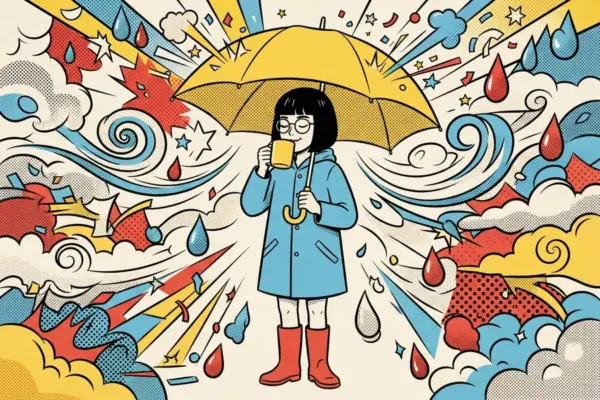
Yellow Umbrella
«Let the weather change around you; you stay yours.»
The test is new — you are among the first hundred to take it.
A flatmate flops onto your sofa, groaning about a heavy week, and you pour the tea, nod, and ask where they left their charger. Their mood slides off you like rain off a good umbrella. Compared with other people, you feel less of this, and the response is faint.
That is a real strength. When a room wobbles, you keep your footing and become the calm corner everyone else leans on. The price is that other people's states tend to reach you as things you understand, and less as things you share.
It is not coldness, and it is not a lack of care. The test only reads the felt, mostly automatic response, and says nothing about how you show up for people the rest of the time. Hold your umbrella high.
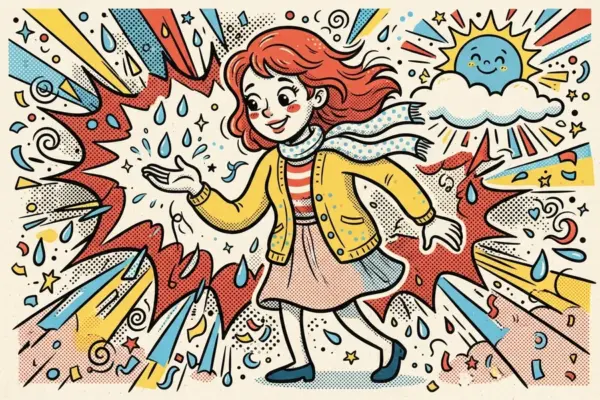
Open Palm
«You let a few drops land and keep walking.»
The test is new — you are among the first hundred to take it.
The person ahead of you in the queue snaps at the cashier, then apologises in a shaky voice, and something soft tugs in you: enough to murmur 'easy, it's fine', enough to hold their bag for a second. Empathy does show up in you, somewhat lighter than the ordinary range.
This is an ordinary spot on the scale, and nobody has dimmed it from a fuller original. You have room to be touched without being carried off, even if some of what others feel drifts past without landing.
What that small pull turns into on a quiet Tuesday is yours to notice. You don't have to chase the rest. A lighter touch is still a touch.

Bright Seesaw
«You dip with other people, then you choose your move.»
The test is new — you are among the first hundred to take it.
Someone at the bus stop tears up over a phone call, and it reaches you: a small ache, a turn of your head, a tissue already out of your pocket. When it comes to empathy, you are squarely in the ordinary range, as most people are.
This is the most common spot on the scale, and it is a full one. What others feel gets to you, warmth and small kindnesses follow at a familiar weight, and what you do with it stays your call.
Nothing here needs fixing, and nothing here needs defending. Ordinary is a perfectly good way for you to care about people.
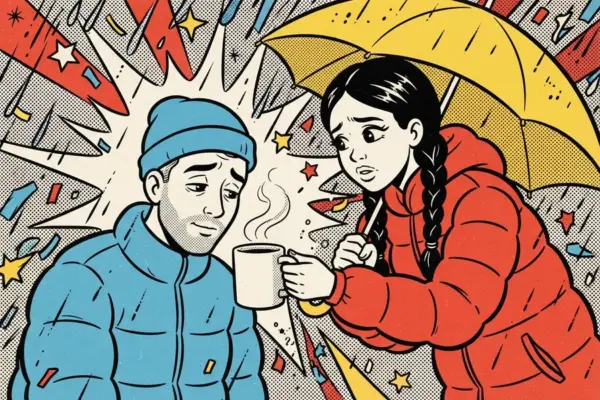
Steaming Mug
«Somebody sighs, and you are already reaching for the kettle.»
The test is new — you are among the first hundred to take it.
A friend's voice cracks over the phone, and before they finish the sentence you are putting your shoes on, already planning the route to their door. Their trouble becomes your project. Your empathy is clearly stronger than the ordinary range: when others feel, you move.
Your strength is closeness and a readiness to help. Here is a soft flag, not a description of your week: feeling someone's distress very strongly can push your own stress up and wear you down, while care aimed at helping does much less of that. Strong empathy also makes you easier to sway, since a moving story or a group you feel part of can pull you further than you'd choose.
Your warmth is real, and so are its limits.

Big Blanket
«You'd wrap a blanket round any room that needed one.»
The test is new — you are among the first hundred to take it.
A stranger's wedding toast has you blinking hard, a neighbour's bad news lands in your chest before they finish the sentence, and you are already planning the casserole. Few people's empathy gets as loud as yours: it is far stronger than other people's.
The strength here is deep, warm closeness. The cost is real and at least as large as at lower strengths: feeling this much is the pattern most likely to tip into stress and exhaustion. What keeps warmth lasting is care that wants to help and doesn't need you to merge with the other person's feeling.
What your warmth does for you in return is a chapter nobody has scored. You can hold the blanket open for people without climbing under it yourself.
About this test
How this test works
This test reads one thing: a self-description of how strongly someone else's mood or distress stirs your own and how strongly it moves you to be warm and to help, folded into a single scale. How accurately you understand what others feel is a separate skill and is not asked about. An overview of affective and cognitive empathy describes emotional contagion and sets out what empathy gives and what it costs, which is why a strong result is not sold as a pure blessing.
Your result marks a position on the scale used here and is not a diagnosis. Powerful empathy has known costs, and a high position is no proof of a special gift. Self-description of a flattering trait runs generous. A further pattern, where a strong response becomes your own distress, is left unscored and appears only as a caution at the highest levels. The test does not stand in for any published or commercial questionnaire.
Behaviours are probed from different angles, answers are graded, and some items face the opposite pole. The total lands in one of several levels, cut by meaning.
In everyday talk, 'empath' names a kind of person, and medicine has no such category. The approach here follows the multidimensional view of empathy: what people mean is an ordinary response that varies in strength and is present in everyone. A dictionary entry on empathy gives the plain definition.
This test is for information only and makes no diagnosis.
Frequently asked questions
What are the signs you're an empath?
No checklist of signs can prove you belong to a special type. Popular lists mention sensing the tension in a room that nobody mentions, taking on the feelings of people nearby, being the friend others confide in, and needing quiet afterwards. The first three describe ways another person's state can move your own, which this test treats as a matter of degree. The last one is something different, and it is not scored here.
Can a doctor or therapist diagnose you as an empath?
No. A diagnosis called empath does not exist, so nobody can give it to you. What you get here is a self-described position on a single scale of empathy, offered for information only.
Is being an empath a real, scientifically recognised thing?
Everyone sits somewhere on a range of responding to the feelings of others, and the pieces behind the word are real: feeling something yourself when others feel, and caring how they fare. The idea of empaths as a separate kind of person lacks backing in research. Your result shows where you fall within the range.
What is the difference between an empath and a highly sensitive person?
High sensitivity is about how strongly you react to your own surroundings, such as noise, light or busy places. The empath label is about reacting to what other people feel, and that is all this page asks. People often use the two terms interchangeably, but the traits are related and distinct.
Can empaths really feel other people's physical pain?
Not literally. Some unusual cases, narrow in scope, come nearer the claim, but a typical result here has nothing to do with them. What research documents for most people is emotional contagion: one person's feelings spark a similar feeling in someone nearby, an echo in feeling only.
Sources
- Davis, M. H. (1983). Measuring individual differences in empathy: Evidence for a multidimensional approach. Journal of Personality and Social Psychology, 44(1), 113–126. doi:10.1037/0022-3514.44.1.113
- Batson, C. D., Fultz, J., & Schoenrade, P. A. (1987). Distress and empathy: Two qualitatively distinct vicarious emotions with different motivational consequences. Journal of Personality, 55(1), 19–39. doi:10.1111/j.1467-6494.1987.tb00426.x
- Klimecki, O. M., Leiberg, S., Ricard, M., & Singer, T. (2014). Differential pattern of functional brain plasticity after compassion and empathy training. Social Cognitive and Affective Neuroscience, 9(6), 873–879.
- Hatfield, E., Cacioppo, J. T., & Rapson, R. L. (1993). Emotional Contagion. Current Directions in Psychological Science, 2(3), 96–100.
Three more tests on the same theme



Breakdown
There's a reason you answer the way you do
Most tests show you a slice of who you are. This one gets to the core: the classic 16-type personality test that goes back to Carl Jung, rebuilt from the ground up and way more accurate. It takes ten minutes, you only ever do it once — and you walk away with an answer most people never quite figure out: why you are the way you are. Why some people just get you, and why with others it's complicated. And that answer won't change: your type is yours for life.
Take the free testHow you compare
The test is new — you are among the first hundred to take it.
Three more tests on the same theme
About this test
How this test works
This test reads one thing: a self-description of how strongly someone else's mood or distress stirs your own and how strongly it moves you to be warm and to help, folded into a single scale. How accurately you understand what others feel is a separate skill and is not asked about. An overview of affective and cognitive empathy describes emotional contagion and sets out what empathy gives and what it costs, which is why a strong result is not sold as a pure blessing.
Your result marks a position on the scale used here and is not a diagnosis. Powerful empathy has known costs, and a high position is no proof of a special gift. Self-description of a flattering trait runs generous. A further pattern, where a strong response becomes your own distress, is left unscored and appears only as a caution at the highest levels. The test does not stand in for any published or commercial questionnaire.
Behaviours are probed from different angles, answers are graded, and some items face the opposite pole. The total lands in one of several levels, cut by meaning.
In everyday talk, 'empath' names a kind of person, and medicine has no such category. The approach here follows the multidimensional view of empathy: what people mean is an ordinary response that varies in strength and is present in everyone. A dictionary entry on empathy gives the plain definition.
This test is for information only and makes no diagnosis.
Frequently asked questions
What are the signs you're an empath?
No checklist of signs can prove you belong to a special type. Popular lists mention sensing the tension in a room that nobody mentions, taking on the feelings of people nearby, being the friend others confide in, and needing quiet afterwards. The first three describe ways another person's state can move your own, which this test treats as a matter of degree. The last one is something different, and it is not scored here.
Can a doctor or therapist diagnose you as an empath?
No. A diagnosis called empath does not exist, so nobody can give it to you. What you get here is a self-described position on a single scale of empathy, offered for information only.
Is being an empath a real, scientifically recognised thing?
Everyone sits somewhere on a range of responding to the feelings of others, and the pieces behind the word are real: feeling something yourself when others feel, and caring how they fare. The idea of empaths as a separate kind of person lacks backing in research. Your result shows where you fall within the range.
What is the difference between an empath and a highly sensitive person?
High sensitivity is about how strongly you react to your own surroundings, such as noise, light or busy places. The empath label is about reacting to what other people feel, and that is all this page asks. People often use the two terms interchangeably, but the traits are related and distinct.
Can empaths really feel other people's physical pain?
Not literally. Some unusual cases, narrow in scope, come nearer the claim, but a typical result here has nothing to do with them. What research documents for most people is emotional contagion: one person's feelings spark a similar feeling in someone nearby, an echo in feeling only.
Sources
- Davis, M. H. (1983). Measuring individual differences in empathy: Evidence for a multidimensional approach. Journal of Personality and Social Psychology, 44(1), 113–126. doi:10.1037/0022-3514.44.1.113
- Batson, C. D., Fultz, J., & Schoenrade, P. A. (1987). Distress and empathy: Two qualitatively distinct vicarious emotions with different motivational consequences. Journal of Personality, 55(1), 19–39. doi:10.1111/j.1467-6494.1987.tb00426.x
- Klimecki, O. M., Leiberg, S., Ricard, M., & Singer, T. (2014). Differential pattern of functional brain plasticity after compassion and empathy training. Social Cognitive and Affective Neuroscience, 9(6), 873–879.
- Hatfield, E., Cacioppo, J. T., & Rapson, R. L. (1993). Emotional Contagion. Current Directions in Psychological Science, 2(3), 96–100.
