
Everyday Personality Test
Ever notice how a long day among people leaves one friend glowing and another hunting for a quiet room? Pick the answer that sounds most like what you would actually do in each scene, and in about seven minutes you get a sketch of how you lean, in four independent choices that add up to a four-letter result. It is a playful self-portrait rather than a verdict, and it says openly how fuzzy its edges are.
No sign-up. Your result right away.

LII INTJ
«You were three moves ahead before anyone asked the question.»
The test is new — you are among the first hundred to take it.
Before the group chat picks a restaurant, you have ranked the options, spotted the flaw in the favourite and drafted a polite objection. Then someone asks what you think, and you answer in four words while the rest unfolds behind your eyes.
Your answers point inward and toward patterns, favour a consistent yardstick and close decisions firmly. Long-range clarity is the strength; the price is a verdict that lands colder than you meant.
CoreTypes calls this type the Grandmaster. The three-letter code is LII (Logical Intuitive Introvert); in the MBTI typology pattern, the four-letter code is INTJ. Functionally, you read as an introverted thinking type. Bars near the middle can flip on a retake, and the last bar also reads everyday tidiness. Share the plan a little sooner.

ESE ESFJ
«You noticed who had no drink before they did.»
The test is new — you are among the first hundred to take it.
You arrive early at a friend's party and end up refilling bowls, remembering whose birthday was last week and steering a quiet guest toward someone they will like. By ten you know everyone's news, and nobody has asked about yours.
Hold the percentages loosely: near-middle bars flip on a retake, and the last bar partly reads everyday tidiness. You land outward, among people and the concrete, and keep decisions settled, which holds a room together and costs you the hard truths you soften.
The three-letter code is ESE (Ethical Sensory Extravert); in the MBTI typology pattern, the four-letter code is ESFJ. Functionally, you read as an extraverted feeling type. CoreTypes calls this type the Beacon. Pull up a chair for yourself too.

ILE ENTP
«You argue the opposite just to see what survives.»
The test is new — you are among the first hundred to take it.
A friend mentions a plan, and within a minute you have three better ones, a counter-argument to each and a grin. The table is laughing, and the original plan has quietly left the room around your second idea.
You lean outward and toward possibilities, with a taste for clear criteria. Decisions stay open while evidence arrives, which gives you fresh angles and leaves a pile of promising threads when the deadline shows up. Functionally, you read as an extraverted intuitive type.
CoreTypes calls this type the Catalyst. The three-letter code is ILE (Intuitive Logical Extravert); in the MBTI typology pattern, the four-letter code is ENTP. Retakes move the near-middle letters first, and the last bar also hears a little everyday tidiness. So which idea goes first for you today?

SEI ISFP
«You say it with tea and a good chair.»
The test is new — you are among the first hundred to take it.
You are shaping something with your hands on a quiet afternoon when a friend drops by. You make tea, say little, and the friend leaves oddly looked after. What the afternoon meant to you stays in the cup.
You lean inward, toward what is real and close at hand and toward warmth, and you keep options open, noticing what people need at the cost of an opinion held too gently to be heard.
Near-middle bars may move on a retake, and the last bar also catches some everyday tidiness. The three-letter code is SEI (Sensory Ethical Introvert); in the MBTI typology pattern, the four-letter code is ISFP. Functionally, you read as an introverted sensing type. CoreTypes calls this type the Harmonist. Quiet counts as an answer here.

IEI INFP
«You keep a small fire going for things that matter.»
The test is new — you are among the first hundred to take it.
A song, a line in a book or a stranger's kind remark sets off a whole inner weather system, and you carry it home like something fragile. At the table you say it was nice; the rest stays with you.
Letters near the middle stay loose between retakes, and the last bar mixes in everyday tidiness. You turn inward, toward possibilities and what people value, and leave questions open; sincere depth is your gift, though joy that stays inside is its cost.
The three-letter code is IEI (Intuitive Ethical Introvert); in the MBTI typology pattern, the four-letter code is INFP. Functionally, you read as an introverted intuitive type. CoreTypes calls this type the Flamekeeper. The fire deserves your care.

SLE ESTP
«You read the room and made your move.»
The test is new — you are among the first hundred to take it.
The plan falls through, the car will not start and the group sinks into a sulk, so you find a field, a ball and a rule made up on the spot. Ten minutes later everyone is laughing, and you are scanning for the next move.
Your answers run outward and toward what is real, with clear criteria and flexible plans. Speed and nerve get you moving; a plan nobody wrote down is the cost. Functionally, you read as an extraverted sensing type.
CoreTypes calls this type the Warlord. The three-letter code is SLE (Sensory Logical Extravert); in the MBTI typology pattern, the four-letter code is ESTP. Bars far from the middle read steady, near-middle ones may flip, and the last picks up everyday tidiness. Go on, make your next move.

EIE ENFJ
«You see what a gathering needs and quietly supply it.»
The test is new — you are among the first hundred to take it.
A friend goes silent at the dinner table, and by dessert you have drawn them out, matched two strangers over a shared hobby and steered the talk to safer ground. On the walk home you realise you barely touched your own plate.
You lean outward and toward possibilities, you read what people need, and you like plans settled; bringing people together is your gift, and a hard truth swallowed for peace is the usual tax.
Near-middle bars flip on a retake, and the last bar also mixes in a bit of everyday tidiness. The three-letter code is EIE (Ethical Intuitive Extravert); in the MBTI typology pattern, the four-letter code is ENFJ. Functionally, you read as an extraverted feeling type. CoreTypes calls this type the Herald. Save one chair for yourself.

LSI ISTJ
«You do what you said, the way you said it.»
The test is new — you are among the first hundred to take it.
You have the spare key, the receipt and the repair manual, and you know which drawer holds each. When a friend panics about a leaking tap, you arrive with a wrench before the panic has finished, and by nightfall it is solved.
Inward, concrete, consistent and settled: that is where your answers lean. Your follow-through is dependable, though a brilliant idea without a plan can make you impatient.
CoreTypes calls this type the Sentinel. The three-letter code is LSI (Logical Sensory Introvert); in the MBTI typology pattern, the four-letter code is ISTJ. Functionally, you read as an introverted thinking type. Bars near the middle may flip on a retake, and the last also reflects everyday tidiness. Settled suits you.

ILI INTP
«You ask why until the answer gets interesting.»
The test is new — you are among the first hundred to take it.
A friend asks how a bridge stays up, and two hours later you are surrounded by sketched diagrams, a half-eaten sandwich and three new questions. The original answer is somewhere on the second napkin, under a coffee ring.
You lean inward, toward patterns and clear criteria, and you leave questions open; a restless, careful mind pays off in ideas and costs you a drawer of fascinating drafts.
A retake could shift the near-middle bars, and the last one also catches everyday tidiness. The three-letter code is ILI (Intuitive Logical Introvert); in the MBTI typology pattern, the four-letter code is INTP. Functionally, you read as an introverted intuitive type. CoreTypes calls this type the Seer. Take the second napkin seriously.

SEE ESFP
«You make an ordinary Tuesday feel like an occasion.»
The test is new — you are among the first hundred to take it.
You turn up at the picnic with a speaker, a ridiculous hat and an invented game, and within minutes strangers are on teams. When someone asks what the plan was, you grin, because this was it.
Your four bars show an outward pull, a taste for what is real and in front of you, a feel for people's moods and a loose grip on plans. That warmth and timing come with a bill: tomorrow's practical details.
CoreTypes calls this type the Duke. The three-letter code is SEE (Sensory Ethical Extravert); in the MBTI typology pattern, the four-letter code is ESFP. Functionally, you read as an extraverted sensing type. Near-middle bars may flip on a retake, and the last bar also picks up some everyday tidiness. Enjoy the sketch; no signature required.

LIE ENTJ
«You turn a vague wish into a schedule.»
The test is new — you are among the first hundred to take it.
Someone says a trip would be nice someday, and by the end of the evening you have a date, a route, a budget and a role for everyone at the table. They are impressed and slightly out of breath.
The last bar partly measures everyday tidiness, and near-middle bars can flip on a retake. You lean outward with an eye on possibilities and clear criteria, and you settle questions fast; momentum carries you, until a quiet voice gets rolled past.
The three-letter code is LIE (Logical Intuitive Extravert); in the MBTI typology pattern, the four-letter code is ENTJ. Functionally, you read as an extraverted thinking type. CoreTypes calls this type the Executor. Hand someone the map and see where it goes.
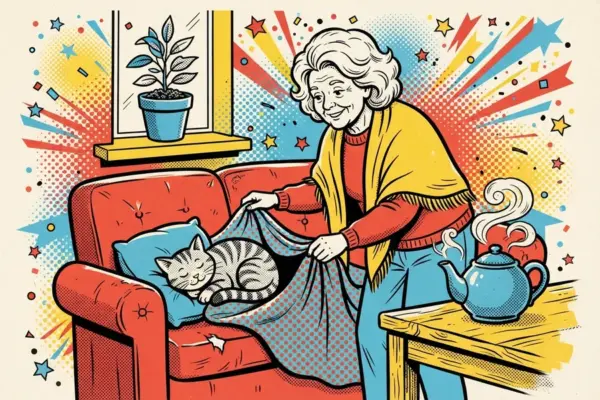
ESI ISFJ
«You remember the small things that make a day easier.»
The test is new — you are among the first hundred to take it.
You know that one friend takes oat milk, another dislikes coriander and a third needs a seat near the door. You keep all this in your head, and the dinner goes so smoothly that nobody notices the planning.
You lean inward and toward the familiar, with people's comfort in mind and decisions kept settled. Steady care is the strength; your own needs, waiting politely at the back of the queue, are the price. Functionally, you read as an introverted feeling type.
CoreTypes calls this type the Custodian. The three-letter code is ESI (Ethical Sensory Introvert); in the MBTI typology pattern, the four-letter code is ISFJ. Expect near-middle bars to wobble on a retake, with the last bar hearing a little everyday tidiness. A seat near the door suits you too.

EII INFJ
«You hear what a person means, beyond what they say.»
The test is new — you are among the first hundred to take it.
A friend says everything is fine in the usual cheerful voice, and you put your tea down. You have noticed the pause, the changed subject, the laugh that came a beat late, and you are wondering how to ask without prying.
Bars close to the middle may flip on a retake, and the last also mixes in everyday tidiness. You face inward, toward patterns and people's inner lives, and settle questions once you see them; your insight is quiet, and the bill is a private load, since you notice more than you say.
The three-letter code is EII (Ethical Intuitive Introvert); in the MBTI typology pattern, the four-letter code is INFJ. Functionally, you read as an introverted feeling type. CoreTypes calls this type the Sage. Say what you noticed; it may be welcome.

LSE ESTJ
«You make things run, and they run on time.»
The test is new — you are among the first hundred to take it.
The reunion has forty guests, no schedule and one grill, until you appear with a clipboard and a calm voice. Within the hour the food is out, the games are set and everybody knows where the chairs are.
Your answers go outward and favour the concrete, with firm criteria and quick closure. When it works, order holds; when it overreaches, a rule lands a moment before somebody explains the exception. Functionally, you read as an extraverted thinking type.
CoreTypes calls this type the Overseer. The three-letter code is LSE (Logical Sensory Extravert); in the MBTI typology pattern, the four-letter code is ESTJ. The last bar partly tracks everyday tidiness, and bars near the middle can flip on a retake. Keep your clipboard, and let the chairs shift.

IEE ENFP
«You light up a room and then ask who needs light.»
The test is new — you are among the first hundred to take it.
You meet someone new at a bus stop and, ten minutes in, you know their favourite childhood smell and their dream of opening a bakery on a boat. By the time the bus arrives you have three project ideas for them and none for yourself.
You lean outward, with an ear for possibilities and for people's stories, and you keep things open. Curiosity makes you warm and contagious, and you pay with a trail of enthusiasms at various stages.
CoreTypes calls this type the Harbinger. The three-letter code is IEE (Intuitive Ethical Extravert); in the MBTI typology pattern, the four-letter code is ENFP. Functionally, you read as an extraverted intuitive type. Near-middle bars are likeliest to flip on a retake, and the last also reflects everyday tidiness. Finish one thing, then wander off proudly.
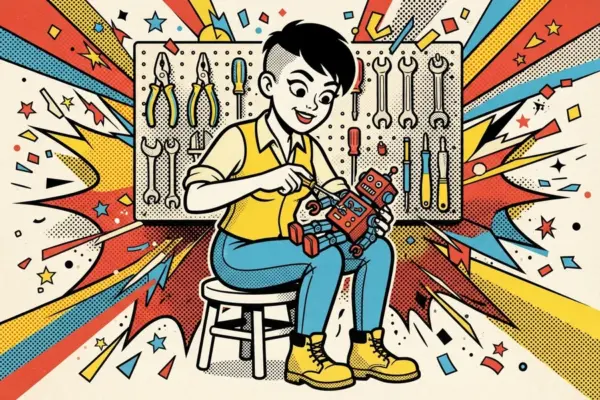
SLI ISTP
«You work it out with your hands, quietly.»
The test is new — you are among the first hundred to take it.
The bike chain snaps on the ride, and while the group debates what to do you are already kneeling by the road with a multitool, saying nothing. Ten minutes later it spins freely, and you answer the thanks with a shrug.
You lean inward and hands-on, with clear criteria and flexible plans; calm competence under pressure comes with a private logic nobody hears explained.
Near-middle bars may flip on a retake, and the last bar also picks up everyday tidiness. The three-letter code is SLI (Sensory Logical Introvert); in the MBTI typology pattern, the four-letter code is ISTP. Functionally, you read as an introverted sensing type. CoreTypes calls this type the Craftsman. A shrug is a perfectly good reply to thanks.
About this test
How this test works
The result is a snapshot of how you answered everyday scenes. It is not a guide to a work path or to who gets picked for a role, not a reading of how you will get on with another person, not a diagnosis or a statement about your mental state, and not a prediction.
Broad, pleasant type descriptions feel true almost regardless of precision, a pull known as the tendency to accept a vague flattering portrait as your own. The fourth choice, about open and settled questions, also overlaps with everyday organisation, a related habit. And every choice rests on a continuous quantity that the quiz cuts in two. A result near the midpoint is the least settled part of the outcome and tends to shift on a second go, which is what test-retest reliability describes; a clearly lopsided result holds up better.
The structure comes from an approach that describes personality through four separate either-or choices: where your energy flows, what you lean on when taking in the world, what a decision rests on, and how you treat an open question. Each choice links to a dimension that researchers measure independently, each is settled on its own from your answers, and the four winners are joined into a code of four letters and a name. A different school of thought assigns types from the meanings carried in natural speech instead of self-reports; it is another method.
Frequently asked questions
How accurate are personality tests?
Start with the limit: a short quiz built on your own account of everyday habits cannot pin down exactly where you sit, and this one asks eight questions for each scale, which gives a rough position at best. Whether the tendencies exist is a separate matter, and they do. What these quizzes aim at overlaps clearly with qualities measured separately in personality research. So the picture is genuine but blurry: a light prompt for reflecting on yourself, not a diagnosis and not a tool for sorting people into boxes.
Can you get a different result if you take a personality test again?
Look at the letter that finished nearest the middle of its scale: that one is the likeliest to flip, while a clearly lopsided letter holds up better. So yes, a retake can bring a different result, and for a quiz of this kind that is well known. A noticeable share of retakes comes back with a letter or two changed. It says something about how steady the instrument is, not about whether you answered carelessly.
What does each letter in a personality type mean?
Each letter answers its own either-or question about you, and no letter depends on another. One covers energy, one covers perception, one covers decisions and one covers closure. Whichever side wins in each area gives you a letter, and the four winners, lined up in the set order, form the code on your result screen.
Is personality a spectrum or are there distinct types?
The qualities behind each letter run along a smooth range with no natural gap in the middle, so people do not split into two camps on any of them. The letter you receive marks where this quiz drew a line through that range, which makes it a convenient label rather than proof that people come in two kinds.
What is the difference between a personality type and a personality trait?
A type is a tidy label: take four ranges, split each at the middle and join the sides that won. A trait is the range itself, a position between two opposite ends such as more inward or more outward. The label is shorthand for the traits and adds nothing deeper about you beyond them.
Sources
- Jung, C. G. (1921/1971). Psychological Types (H. G. Baynes, Trans., rev. R. F. C. Hull). Princeton University Press.
- McCrae, R. R., & Costa, P. T., Jr. (1989). Reinterpreting the Myers-Briggs Type Indicator From the Perspective of the Five-Factor Model of Personality. Journal of Personality, 57(1), 17–40. doi:10.1111/j.1467-6494.1989.tb00759.x
- John, O. P., & Srivastava, S. (1999). The Big Five trait taxonomy: History, measurement, and theoretical perspectives. In L. A. Pervin & O. P. John (Eds.), Handbook of Personality: Theory and Research (2nd ed., Vol. 2, pp. 102–138). Guilford Press.
- MacCallum, R. C., Zhang, S., Preacher, K. J., & Rucker, D. D. (2002). On the practice of dichotomization of quantitative variables. Psychological Methods, 7(1), 19–40. doi:10.1037/1082-989X.7.1.19
Three more tests on the same theme



Breakdown
There's a reason you answer the way you do
Most tests show you a slice of who you are. This one gets to the core: the classic 16-type personality test that goes back to Carl Jung, rebuilt from the ground up and way more accurate. It takes ten minutes, you only ever do it once — and you walk away with an answer most people never quite figure out: why you are the way you are. Why some people just get you, and why with others it's complicated. And that answer won't change: your type is yours for life.
Take the free testHow you compare
The test is new — you are among the first hundred to take it.
Three more tests on the same theme
About this test
How this test works
The result is a snapshot of how you answered everyday scenes. It is not a guide to a work path or to who gets picked for a role, not a reading of how you will get on with another person, not a diagnosis or a statement about your mental state, and not a prediction.
Broad, pleasant type descriptions feel true almost regardless of precision, a pull known as the tendency to accept a vague flattering portrait as your own. The fourth choice, about open and settled questions, also overlaps with everyday organisation, a related habit. And every choice rests on a continuous quantity that the quiz cuts in two. A result near the midpoint is the least settled part of the outcome and tends to shift on a second go, which is what test-retest reliability describes; a clearly lopsided result holds up better.
The structure comes from an approach that describes personality through four separate either-or choices: where your energy flows, what you lean on when taking in the world, what a decision rests on, and how you treat an open question. Each choice links to a dimension that researchers measure independently, each is settled on its own from your answers, and the four winners are joined into a code of four letters and a name. A different school of thought assigns types from the meanings carried in natural speech instead of self-reports; it is another method.
Frequently asked questions
How accurate are personality tests?
Start with the limit: a short quiz built on your own account of everyday habits cannot pin down exactly where you sit, and this one asks eight questions for each scale, which gives a rough position at best. Whether the tendencies exist is a separate matter, and they do. What these quizzes aim at overlaps clearly with qualities measured separately in personality research. So the picture is genuine but blurry: a light prompt for reflecting on yourself, not a diagnosis and not a tool for sorting people into boxes.
Can you get a different result if you take a personality test again?
Look at the letter that finished nearest the middle of its scale: that one is the likeliest to flip, while a clearly lopsided letter holds up better. So yes, a retake can bring a different result, and for a quiz of this kind that is well known. A noticeable share of retakes comes back with a letter or two changed. It says something about how steady the instrument is, not about whether you answered carelessly.
What does each letter in a personality type mean?
Each letter answers its own either-or question about you, and no letter depends on another. One covers energy, one covers perception, one covers decisions and one covers closure. Whichever side wins in each area gives you a letter, and the four winners, lined up in the set order, form the code on your result screen.
Is personality a spectrum or are there distinct types?
The qualities behind each letter run along a smooth range with no natural gap in the middle, so people do not split into two camps on any of them. The letter you receive marks where this quiz drew a line through that range, which makes it a convenient label rather than proof that people come in two kinds.
What is the difference between a personality type and a personality trait?
A type is a tidy label: take four ranges, split each at the middle and join the sides that won. A trait is the range itself, a position between two opposite ends such as more inward or more outward. The label is shorthand for the traits and adds nothing deeper about you beyond them.
Sources
- Jung, C. G. (1921/1971). Psychological Types (H. G. Baynes, Trans., rev. R. F. C. Hull). Princeton University Press.
- McCrae, R. R., & Costa, P. T., Jr. (1989). Reinterpreting the Myers-Briggs Type Indicator From the Perspective of the Five-Factor Model of Personality. Journal of Personality, 57(1), 17–40. doi:10.1111/j.1467-6494.1989.tb00759.x
- John, O. P., & Srivastava, S. (1999). The Big Five trait taxonomy: History, measurement, and theoretical perspectives. In L. A. Pervin & O. P. John (Eds.), Handbook of Personality: Theory and Research (2nd ed., Vol. 2, pp. 102–138). Guilford Press.
- MacCallum, R. C., Zhang, S., Preacher, K. J., & Rucker, D. D. (2002). On the practice of dichotomization of quantitative variables. Psychological Methods, 7(1), 19–40. doi:10.1037/1082-989X.7.1.19
