
Jungian Archetype Quiz
Who fixes the group plan when everyone shrugs, and who just brings the snacks? Choose what you would actually do in everyday scenes, and in about eight minutes you get a portrait of the role steering your answers right now. It’s a playful look in the mirror rather than a verdict, so go with your first instinct.
No sign-up. Your result right away.

Everyman
«You'd rather pass the salt than give the speech.»
The test is new — you are among the first hundred to take it.
The group chat can't pick a restaurant, so you vote for the one everybody can reach by bus. You're the one who remembers who's vegetarian and who's running late. For now, the role leading your answers is the Everyman.
Solidarity is what you bring: you notice who's drifting to the edge of the table and pull them back in. Being treated as swappable stings, even among your own people.
Going with the group isn't a missing opinion; you hold plenty and prefer to hold them together. No test in this field, even the famous ones, gives a clean, independently checked read of your archetype. This names the pattern leading now among the twelve, not a label for life; a neighbouring archetype may feel just as yours. The table holds because you sit at it.

Innocent
«You leave the porch light on for good news.»
The test is new — you are among the first hundred to take it.
The flight is delayed and the departures board keeps changing its mind. You buy a coffee, open your book and tell your travel companions it will all work out. For now, the role leading your answers is the Innocent.
Your optimism holds under pressure, and other people lean on it. The unpleasant bit gets postponed until it's standing in the hallway with its coat on. Calling that naive misses how deliberately you picked these values and stuck to them.
No test in this field, even the famous ones, gives a clean, independently checked read of your archetype. This names the pattern leading now among the twelve, not a label for life; a neighbouring archetype may feel just as yours. Hope, in your hands, is a decision.
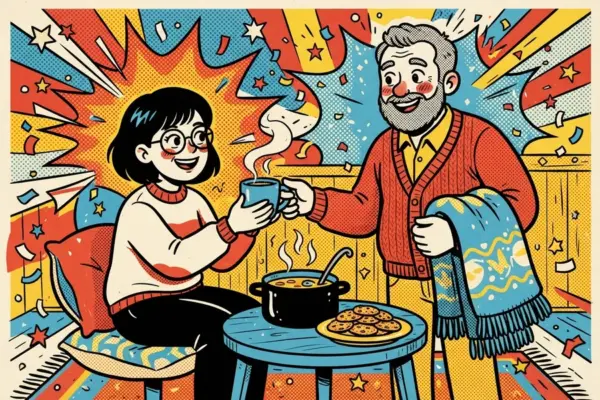
Caregiver
«You bring the soup before anyone asks.»
The test is new — you are among the first hundred to take it.
A colleague's week has been rough, and by lunchtime a covered dish sits on their desk with your handwriting on the lid. You cooked it last night, between everything else. For now, the role leading your answers is the Caregiver.
People set their watches by your follow-through, and the generosity behind it is real. Your own needs, meanwhile, wait in the queue a little too long. You make heavy effort look like nothing.
Because you ask for nothing in return, the steadiness gets mistaken for scenery. No test in this field, even the famous ones, gives a clean, independently checked read of your archetype. This names the pattern leading now among the twelve, not a label for life; a neighbouring archetype may feel just as yours. Your turn at the table is overdue.

Lover
«You'd rather be fully there than politely nearby.»
The test is new — you are among the first hundred to take it.
At the party you end up on the stairs with one friend, deep in a conversation that matters more than the music. You'll text them first thing tomorrow. For now, the role leading your answers is the Lover.
Closeness that lasts is your gift, and it takes real nerve to keep up. Raising a quarrel feels riskier to you than it has to be.
Warmth like yours can look boundary-free from outside; what drives it is how much the bond itself matters. No test in this field, even the famous ones, gives a clean, independently checked read of your archetype. This names the pattern leading now among the twelve, not a label for life; a neighbouring archetype may feel just as yours. You pick the deeper conversation.

Jester
«You make the heavy room lighter by one joke.»
The test is new — you are among the first hundred to take it.
The lift stalls between floors, and within minutes you have the whole group scoring each other's humming. The mood goes from tight to giggly before the doors open. For now, the role leading your answers is the Jester.
A well-timed joke from you shifts the mood and lets the room breathe. Land it a beat too early and it sounds like waving the problem away. Lifts stall better with you in them.
The lightness reads as shallow, though it's a deliberate way of handling the hard stuff. No test in this field, even the famous ones, gives a clean, independently checked read of your archetype. This names the pattern leading now among the twelve, not a label for life; a neighbouring archetype may feel just as yours. Keep the jokes, and keep reading the room.

Explorer
«You want the road you haven't walked yet.»
The test is new — you are among the first hundred to take it.
A friend suggests the usual weekend spot, and you're already studying a map of a village you can't pronounce. The bus leaves in an hour. For now, the role leading your answers is the Explorer.
Independence, curiosity and the nerve to try the untried are your strengths. Settling on a single option feels, to you, like a door closing. That restlessness is no complaint about what you have; it's the pull of what's still unopened.
No test in this field, even the famous ones, gives a clean, independently checked read of your archetype. This names the pattern leading now among the twelve, not a label for life; a neighbouring archetype may feel just as yours. The map is your favourite book.

Sage
«You'd rather get it right than get it fast.»
The test is new — you are among the first hundred to take it.
A friend states a statistic with total confidence, and you pull out your phone to find where it comes from. A few tabs later, you know more than the whole table. For now, the role leading your answers is the Sage.
You prefer the truth to a convenient guess, and your depth shows. A question can get chewed long past the point where acting would help.
The pause looks like dithering; it's really loyalty to doing things properly. No test in this field, even the famous ones, gives a clean, independently checked read of your archetype. This names the pattern leading now among the twelve, not a label for life; a neighbouring archetype may feel just as yours. Good answers take the time they take.

Creator
«You see an empty page as an invitation.»
The test is new — you are among the first hundred to take it.
There's a half-finished table in the garage, a notebook of next year's ideas on top of it, and glue on your sleeve. Each project began with a what-if. For now, the role leading your answers is the Creator.
Originality is your gift: you make things that weren't there yesterday. Polishing can run forever, and the next idea starts before the last is done. You know exactly which drawer holds the unfinished ones. That flitting isn't missing follow-through; the joy lives at the beginning.
No test in this field, even the famous ones, gives a clean, independently checked read of your archetype. This names the pattern leading now among the twelve, not a label for life; a neighbouring archetype may feel just as yours. Finish one, then flirt with the next.

Hero
«You'd rather take the hill than study the map.»
The test is new — you are among the first hundred to take it.
The lake is cold and the whole group hesitates on the jetty. You're already in the water, shouting that it's fine and waving the others in. For now, the role leading your answers is the Hero.
Courage, and the will to show a hard thing can be done, carry you. Jumping in before the situation has been thought through is the bill.
Others see impatience; you feel the itch of a problem left hanging. No test in this field, even the famous ones, gives a clean, independently checked read of your archetype. This names the pattern leading now among the twelve, not a label for life; a neighbouring archetype may feel just as yours. You'd rather be in the arena.

Outlaw
«You're not against rules, just pointless ones.»
The test is new — you are among the first hundred to take it.
The new office policy arrives as a ten-page PDF, and you're the first to ask what problem it solves. A few heads nod, relieved that somebody said it. For now, the role leading your answers is the Outlaw.
You question what everybody else accepted, and you think differently on purpose. The risk is opposing something purely because it's the established way. You can smell a flimsy rule from across the room.
It's not defiance for sport: you aim at the specific rule that looks broken and leave the rest of the building standing. No test in this field, even the famous ones, gives a clean, independently checked read of your archetype. This names the pattern leading now among the twelve, not a label for life; a neighbouring archetype may feel just as yours. Change needs you in the room.
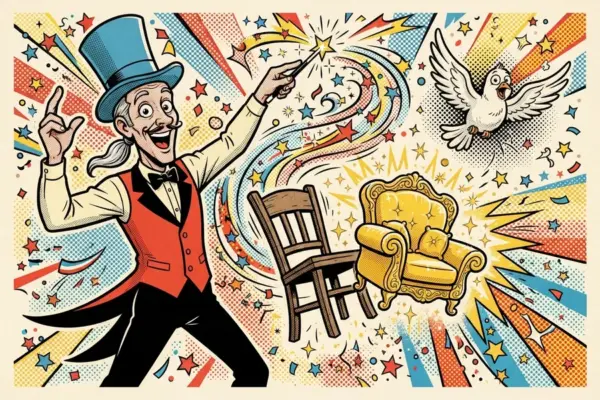
Magician
«You see the lever where others see a wall.»
The test is new — you are among the first hundred to take it.
The meeting is stuck on the same budget argument, so you redraw the question on the whiteboard until the room sees a different problem. Shoulders drop. For now, the role leading your answers is the Magician.
You see how things fit together, and you can bring a change about. The cost: you may steer a situation somewhere other people didn't agree to go.
Power isn't the prize; you're chasing possibilities that everyone else walked past. No test in this field, even the famous ones, gives a clean, independently checked read of your archetype. This names the pattern leading now among the twelve, not a label for life; a neighbouring archetype may feel just as yours. A good reframe beats a loud argument.

Ruler
«You'd rather steer than watch the boat drift.»
The test is new — you are among the first hundred to take it.
The fire drill has everybody milling in the car park, so you start counting heads and pointing people toward the assembly point. Order appears within a minute. For now, the role leading your answers is the Ruler.
You bring steadiness, and a knack for arranging a tangled mess so it works for everybody. Hold the reins a bit past the point anyone wants them held, though, and it shows.
Rank doesn't interest you much; a room with nobody steering it simply bothers you. No test in this field, even the famous ones, gives a clean, independently checked read of your archetype. This names the pattern leading now among the twelve, not a label for life; a neighbouring archetype may feel just as yours. Somebody has to count the heads.
About this test
How this test works
Think of the result as a mirror rather than an instrument. Your answers are self-report, so what comes back is a prompt for reflection about the role in front of you at the moment, with its own drive, its own sore spot and its own outward style. It is not a fixed label, and it is not a lab-grade classification.
The wider idea behind it, that people and stories share a stock of recurring character images, is old, and its boldest claim, that those images are inherited structures of the mind, is still disputed in peer-reviewed journals. Some argue it cannot be tested at all; others say a narrower piece of it can. We stay out of that fight. For the twelve names used here, the closest thing to evidence is a single refereed paper in which people's reactions to fictional characters tracked the names measurably. That supports using them as a shared vocabulary. It does not back the grand theory, and it does not fix anyone to a single role.
Those names come from a later author, not from the original notion, which never settled on a fixed count. For background, see a dictionary definition of the concept and a general overview of the idea. This quiz has no link to any paid archetype product.
Frequently asked questions
Are there twelve archetypes or more?
The original idea never fixed a count and leaves the list open. The familiar lineup of twelve was assembled later by a different writer, and this test borrows it.
Does this match the well-known paid archetype test?
No. This test is independent. It borrows the widely shared twelve names but has no connection with any paid instrument and doesn't claim to equal one.
Is archetype theory backed by science?
Not in the sense of settled proof. Researchers still argue over the underlying theory. For the popular twelve names there is a single empirical study, and its finding is modest: the way audiences respond to made-up characters lines up with the names, measurably. It says nothing about you being only one type.
Can two archetypes fit you at once?
Your result shows whichever role is in front at the moment. Others with similar motives can feel just as familiar, and that is an ordinary outcome, not an error.
How long is this test?
Plan on about eight minutes, in one sitting. There are 36 questions, spread evenly across the archetypes, and your portrait appears as soon as you finish.
Sources
- Jung, C. G. (1959/1969). The Archetypes and the Collective Unconscious. Collected Works, Vol. 9, Part I. Princeton University Press.
- Mark, M., & Pearson, C. S. (2001). The Hero and the Outlaw: Building Extraordinary Brands Through the Power of Archetypes. McGraw-Hill.
- Faber, M. A., & Mayer, J. D. (2009). Resonance to archetypes in media: There's some accounting for taste. Journal of Research in Personality, 43(3), 307–322. doi:10.1016/j.jrp.2008.11.003
- Neher, A. (1996). Jung's theory of archetypes: A critique. Journal of Humanistic Psychology, 36(2), 61–91. doi:10.1177/00221678960362008
Three more tests on the same theme


Breakdown
There's a reason you answer the way you do
Most tests show you a slice of who you are. This one gets to the core: the classic 16-type personality test that goes back to Carl Jung, rebuilt from the ground up and way more accurate. It takes ten minutes, you only ever do it once — and you walk away with an answer most people never quite figure out: why you are the way you are. Why some people just get you, and why with others it's complicated. And that answer won't change: your type is yours for life.
Take the free testHow you compare
The test is new — you are among the first hundred to take it.
Three more tests on the same theme
About this test
How this test works
Think of the result as a mirror rather than an instrument. Your answers are self-report, so what comes back is a prompt for reflection about the role in front of you at the moment, with its own drive, its own sore spot and its own outward style. It is not a fixed label, and it is not a lab-grade classification.
The wider idea behind it, that people and stories share a stock of recurring character images, is old, and its boldest claim, that those images are inherited structures of the mind, is still disputed in peer-reviewed journals. Some argue it cannot be tested at all; others say a narrower piece of it can. We stay out of that fight. For the twelve names used here, the closest thing to evidence is a single refereed paper in which people's reactions to fictional characters tracked the names measurably. That supports using them as a shared vocabulary. It does not back the grand theory, and it does not fix anyone to a single role.
Those names come from a later author, not from the original notion, which never settled on a fixed count. For background, see a dictionary definition of the concept and a general overview of the idea. This quiz has no link to any paid archetype product.
Frequently asked questions
Are there twelve archetypes or more?
The original idea never fixed a count and leaves the list open. The familiar lineup of twelve was assembled later by a different writer, and this test borrows it.
Does this match the well-known paid archetype test?
No. This test is independent. It borrows the widely shared twelve names but has no connection with any paid instrument and doesn't claim to equal one.
Is archetype theory backed by science?
Not in the sense of settled proof. Researchers still argue over the underlying theory. For the popular twelve names there is a single empirical study, and its finding is modest: the way audiences respond to made-up characters lines up with the names, measurably. It says nothing about you being only one type.
Can two archetypes fit you at once?
Your result shows whichever role is in front at the moment. Others with similar motives can feel just as familiar, and that is an ordinary outcome, not an error.
How long is this test?
Plan on about eight minutes, in one sitting. There are 36 questions, spread evenly across the archetypes, and your portrait appears as soon as you finish.
Sources
- Jung, C. G. (1959/1969). The Archetypes and the Collective Unconscious. Collected Works, Vol. 9, Part I. Princeton University Press.
- Mark, M., & Pearson, C. S. (2001). The Hero and the Outlaw: Building Extraordinary Brands Through the Power of Archetypes. McGraw-Hill.
- Faber, M. A., & Mayer, J. D. (2009). Resonance to archetypes in media: There's some accounting for taste. Journal of Research in Personality, 43(3), 307–322. doi:10.1016/j.jrp.2008.11.003
- Neher, A. (1996). Jung's theory of archetypes: A critique. Journal of Humanistic Psychology, 36(2), 61–91. doi:10.1177/00221678960362008
