
16 Personalities Test
Do you recharge at a party or on the sofa, and does a plan feel like a relief or a cage? Answer a run of everyday scenes in about nine minutes and you get a four-letter code with a small portrait of how you lean. Treat it as a playful mirror: it describes your answers today, and nothing more.
No sign-up. Your result right away.

ISTJ
«If it's on your list, it's already done.»
The test is new — you are among the first hundred to take it.
The dentist's reminder pings and you've already booked the slot, put the card in your coat and hung the spare keys on their labelled hook, all before the kettle has boiled. ISTJ — Tidy Shelf, inward-facing, fact-focused, logic-led, and schedule-driven.
People lean on you because you do what you said without a nudge. The bill arrives under stress, when the smallest concrete worries start looping in your head and begin to look like forecasts.
This is one of sixteen ordinary results, and none of them stands above the others. It is the picture your answers make here and now, so another day may redraw it. The shelf stays, and one jar may go unlabelled.

ISFJ
«You notice who is cold before they say a word.»
The test is new — you are among the first hundred to take it.
A friend arrives soaked from the rain, and you have the towel, the hot drink and the good armchair ready before the door has fully closed, then offer the quiet guest in the corner the last biscuit. ISFJ — Warm Blanket, inward-facing, fact-focused, people-led, and schedule-driven.
A room runs smoothly around you, because you remember who takes sugar and who hates a draught. The catch is a habit of carrying everyone's comfort in your bag while your own needs sink to the bottom. This is simply one of sixteen ordinary outcomes, and no outcome sits above another.
Your answers drew this picture today, and a different week could shade it differently. Your own mug deserves filling first.

INFJ
«You hear what people mean before they finish saying it.»
The test is new — you are among the first hundred to take it.
You stand at the window with a cup, turning over a friend's offhand remark until you catch what it was really about, then decide to wait before mentioning it. INFJ — Night Window, inward-facing, pattern-focused, people-led, and schedule-driven.
You sense what drives the people around you, and you keep working for something bigger than yourself that you believe in.
Once a position settles in you, it sets like concrete, and other people's arguments queue politely at the door. This is one of sixteen ordinary results, equal to its neighbours in every way that counts. Treat it as a snapshot of today's answers, because another season can shift a letter or two. The window can stay open, and nobody needs convincing tonight.

INTJ
«You spot the pattern before anyone else has found the problem.»
The test is new — you are among the first hundred to take it.
The group chat is still debating tonight's plan while you have quietly mapped the next three years, with a fallback route marked in red and the first three moves already numbered. INTJ — Long Game, inward-facing, pattern-focused, logic-led, and schedule-driven.
Ideas get built, not just admired, because you hold yourself to a demanding standard. Your views set hard, and the day one finally gives way, the swing in the other direction can startle you. Among the sixteen ordinary results this one stands level with the rest, with none ahead or behind. It reflects how you answered here, and a different day could move the picture.
Your map gets better each time you let someone mark it up.

ISTP
«You watch quietly until something breaks, then you know why.»
The test is new — you are among the first hundred to take it.
The bike chain slips, and you crouch beside it with the right spanner already in hand, tracing the fault from cause to effect before anyone has offered an opinion. ISTP — Quiet Toolbox, inward-facing, fact-focused, logic-led, and open-ended.
You tolerate loose ends and take problems apart one cause at a time. This is one of sixteen ordinary results, and none of them outranks another.
The flip side is distance: you can be so busy analysing that, in the moment, naming what you feel takes a while. It is a current picture of your answers, not a fixed trait, so it may move later. Naming a feeling takes the same patience as tracing a fault, and you have plenty.
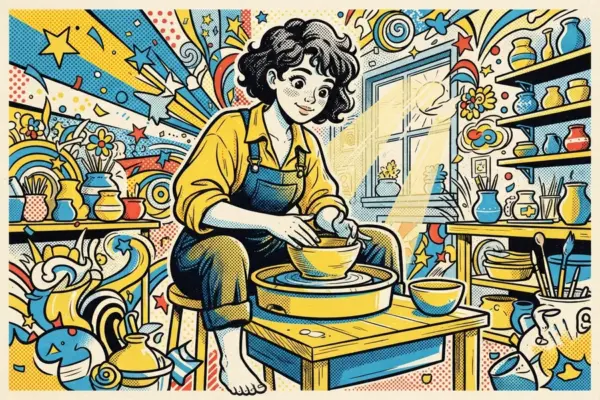
ISFP
«You keep room for the moment, and for what you value.»
The test is new — you are among the first hundred to take it.
Sunlight falls across the workbench, the wheel hums and nobody expects anything from you, so the bowl takes shape slowly, exactly the way you like it, with no one to explain it to. ISFP — Spinning Clay, inward-facing, fact-focused, people-led, and open-ended.
You hold on to the present moment, your own space and your values even when everyone pushes you to fit in. When a conflict arrives, though, you tend to fold it up inside you rather than talk it through. This is one of sixteen ordinary, equally good results, and nobody's outranks another.
It shows the current shape of your answers here, and shapes can change on the wheel. The awkward sentence is shorter out loud than in your head.

INFP
«You fold a paper boat for every person and idea you love.»
The test is new — you are among the first hundred to take it.
You hug the dog, stare at the stars and fold a paper boat for a wish you have told no one, already wondering whom it could help and whether it will float. INFP — Paper Boats, inward-facing, pattern-focused, people-led, and open-ended.
You stay faithful to your values and the people close to you, curious about what could be, and glad to help others grow.
The price is digesting everything alone and polishing it long after it was good enough. This is one of sixteen ordinary results, and each of them is equally at home in the world. Your answers made this picture here, and a later day may draw a different one. One boat in the water beats a harbour full of drafts.

INTP
«You pull the thread until the logic shows itself.»
The test is new — you are among the first hundred to take it.
A casual question about how the washing machine works leaves you sitting cross-legged on the floor three hours later, surrounded by diagrams and one very satisfying explanation that nobody asked for. INTP — Tangled Thread, inward-facing, pattern-focused, logic-led, and open-ended.
Whatever grabs you gets a logical explanation, abstract, focused and sharp once you're hooked. The cost is a theory that keeps growing while the decision waits patiently in the corner. Think of this as one of sixteen ordinary results, equal to every other, with nothing above or below it. It is the current picture of your answers, which can look different on another day.
A conclusion worn for a weekend teaches you more than another week of theory.

ESTP
«You learn it by doing it, preferably already moving.»
The test is new — you are among the first hundred to take it.
Someone points at a half-pipe, and you are on the board before the explanation ends, working out the physics halfway up the wall and grinning at a landing you have not made yet. ESTP — Fast Ramp, outward-facing, fact-focused, logic-led, and open-ended.
Learning by doing is your fastest route, and flexible, practical choices keep you moving. This is one of sixteen ordinary results, and none of them sits higher on the ramp. You tend to act a few steps ahead of your thinking, and the risk climbs with the speed.
It is the picture your answers painted here, not a permanent label, so a retake may differ. Helmet on, trick intact.

ESFP
«You walk in, and the room gets warmer and funnier.»
The test is new — you are among the first hundred to take it.
The birthday is flat until you arrive with a tambourine and a plan for snacks, and within minutes the quiet corner has joined the conga line and someone is asking for the playlist. ESFP — Confetti Burst, outward-facing, fact-focused, people-led, and open-ended.
People feel welcome around you, and your down-to-earth cheer makes any gathering easier. The cost is a talent for finding the snack table whenever a hard talk is due.
This is one of sixteen ordinary results, and no result rates above another. It describes the pattern in your answers today and may land differently another time. Confetti is welcome, and so is the serious chat.

ENFP
«You see a possible future in every conversation.»
The test is new — you are among the first hundred to take it.
You blow a bubble and, inside it, there is a lighthouse, a rocket and your neighbour's half-finished band, all connected by Thursday night and a stranger you met an hour ago. ENFP — Bubble Garden, outward-facing, pattern-focused, people-led, and open-ended.
Ideas and people link up fast around you, and warm enthusiasm carries it along.
The cost is a garden with too many bubbles, and some never get picked or finished. This is one of sixteen ordinary results, equal to every other combination. It is the current picture of your answers, and a new day can blow it somewhere else. The garden is lovelier once at least one bubble lands.

ENTP
«You love an idea more once somebody argues with it.»
The test is new — you are among the first hundred to take it.
Over dinner someone mentions a bridge, and by dessert you have redesigned the traffic system, argued both sides of the toll and moved on to the next problem while nobody remembers how the talk began. ENTP — Spark Collector, outward-facing, pattern-focused, logic-led, and open-ended.
Strategy and problem-solving come quickly to you, delivered straight, and routine bores you fast. A debate can run for the fun of the chase, long after you stopped believing your side. This is one of sixteen ordinary results, standing level with all the others. It is the shape of your answers here, and another week can rearrange the sparks.
Your best argument may be the one you make against yourself.

ESTJ
«You make the line move, politely and on time.»
The test is new — you are among the first hundred to take it.
The event starts at ten, and by nine-fifteen you have set out the cones, briefed the volunteers and drawn a very straight line with a clipboard, while latecomers get a friendly smile and a laminated map from you. ESTJ — Clear Lane, outward-facing, fact-focused, logic-led, and schedule-driven.
You organise for results and say plainly what needs doing, practical and decisive. This is one of sixteen ordinary results, and none of them leads the others. The catch is grip: you can tighten the lane until ambiguity and slow-to-settle feelings start to wear on you.
Your answers formed this picture today, and tomorrow's answers may form another. Lanes run best when the people in them were asked what they want.

ESFJ
«You set one more place at the table without being asked.»
The test is new — you are among the first hundred to take it.
Dinner for six becomes dinner for nine, and you are already moving plates, remembering who dislikes mushrooms and seating the quiet guest next to someone kind, then sliding two extra chairs under the table. ESFJ — Long Table, outward-facing, fact-focused, people-led, and schedule-driven.
You sense what the people around you need, and loyalty and conscientiousness keep you acting on it. The cost is prizing other people's approval a little too highly, which makes asking for your own seat harder.
This is one of sixteen ordinary results, and every other result is just as ordinary. It reflects how you answered here, and a new season may rearrange the chairs. Sit down and let someone pass you the potatoes.

ENFJ
«You see what someone could become and offer a hand.»
The test is new — you are among the first hundred to take it.
A friend stalls halfway up a steep path, and you have turned back, offered a hand and described the view from the top so well that they start climbing. ENFJ — Open Hand, outward-facing, pattern-focused, people-led, and schedule-driven.
You see potential in people and follow through on promises with real warmth.
The catch is adopting a friend's crisis as your own project while your own limits get a very short meeting. This is one of sixteen ordinary results, and no result is placed above another. It is the current picture drawn by your answers, and a later day may redraw it. Try one hill with nobody to carry.

ENTJ
«You spot the inefficiency and have a system for it by lunch.»
The test is new — you are among the first hundred to take it.
The meeting wanders, so you redraw the agenda on a napkin, assign the next steps and plant a date in the calendar like a flag on a hilltop. ENTJ — Flag Planter, outward-facing, pattern-focused, logic-led, and schedule-driven.
You see waste quickly and build the system that fixes it, frankly and decisively. This is one of sixteen ordinary results, and none of them ranks above another. You may push for agreement a little hard and run short of patience for whoever is still thinking it over.
It is only the current picture of your answers, and a different day may plant the flag elsewhere. Plant the flag, then wait for the others to arrive.
About this test
How this test works
Think of the result as a self-portrait assembled from your own choices: it shows how you currently describe yourself, and it exists for entertainment and for thinking about yourself, not to settle any important decision about you or other people.
The scenes follow a long tradition of describing people by preference. Four preferences are scored separately: how structured you like your days, where your energy goes, how you arrive at a decision, and what you notice first when you take things in. Each sits between two opposite sides. Every scene serves one preference, and its four options lean to one side or the other, two strongly and two gently. A draw falls to the side more common in the population at large, because no middle category exists. The four winning sides spell a code of four letters, one of sixteen possible results.
Results of this kind shift. After a few weeks many people see at least one letter change, and the full code holds even less well over years. The traits underneath shade gradually into one another, with most people in the middle ground, so a two-sided outcome is simply how the answer is displayed. For background, read how a psychology dictionary defines the four preferences and how stable and well tested the results are. The test stops at the code itself; nothing is added to it.
Frequently asked questions
How accurate is this personality type test?
Not in the way a ruler is accurate. Everything rests on your own answers, so the result can only echo how you see yourself at the moment you answer. A letter simply marks the side you edged towards, so a close call can flip on a different day, and plenty of people who sit a similar quiz again later end up with a changed code. Critics of four-letter typologies have said as much, and they have a fair case. Treat the outcome as a bit of fun and a prompt for a little self-reflection, nothing more.
How is this test different from the popular site with sixteen personality types?
The idea of sorting people by four opposite pairs of preferences (E or I, S or N, T or F, J or P) is old psychological theory that no company owns. The big commercial site added a branded layer of its own, including an extra fifth trait. None of that layer exists here: you get the bare four letters.
How many questions are in the test?
There are 40 questions, divided evenly between four areas, ten apiece. Each area is scored by itself, so your answers about energy never influence the verdict about decisions. Set aside about nine minutes.
Is my result common, and where does it rank?
The test ranks nothing and quotes no population figures for any code. It only reports which one of the sixteen possible codes your own answers formed, and each is as ordinary as the next.
Sources
- Jung, C. G. (1921). Psychologische Typen [Psychological Types].
- Myers, I. B., McCaulley, M. H., Quenk, N. L., & Hammer, A. L. (1998). MBTI Manual (3rd ed.).
- Pittenger, D. J. (2005). Cautionary comments regarding the Myers-Briggs Type Indicator. Consulting Psychology Journal: Practice and Research, 57(3), 210–221.
- Bess, T. L., & Harvey, R. J. (2002). Bimodal score distributions and the Myers-Briggs Type Indicator: Fact or artifact? Journal of Personality Assessment, 78(1), 176–186.
Three more tests on the same theme



Breakdown
There's a reason you answer the way you do
Most tests show you a slice of who you are. This one gets to the core: the classic 16-type personality test that goes back to Carl Jung, rebuilt from the ground up and way more accurate. It takes ten minutes, you only ever do it once — and you walk away with an answer most people never quite figure out: why you are the way you are. Why some people just get you, and why with others it's complicated. And that answer won't change: your type is yours for life.
Take the free testHow you compare
The test is new — you are among the first hundred to take it.
Three more tests on the same theme
About this test
How this test works
Think of the result as a self-portrait assembled from your own choices: it shows how you currently describe yourself, and it exists for entertainment and for thinking about yourself, not to settle any important decision about you or other people.
The scenes follow a long tradition of describing people by preference. Four preferences are scored separately: how structured you like your days, where your energy goes, how you arrive at a decision, and what you notice first when you take things in. Each sits between two opposite sides. Every scene serves one preference, and its four options lean to one side or the other, two strongly and two gently. A draw falls to the side more common in the population at large, because no middle category exists. The four winning sides spell a code of four letters, one of sixteen possible results.
Results of this kind shift. After a few weeks many people see at least one letter change, and the full code holds even less well over years. The traits underneath shade gradually into one another, with most people in the middle ground, so a two-sided outcome is simply how the answer is displayed. For background, read how a psychology dictionary defines the four preferences and how stable and well tested the results are. The test stops at the code itself; nothing is added to it.
Frequently asked questions
How accurate is this personality type test?
Not in the way a ruler is accurate. Everything rests on your own answers, so the result can only echo how you see yourself at the moment you answer. A letter simply marks the side you edged towards, so a close call can flip on a different day, and plenty of people who sit a similar quiz again later end up with a changed code. Critics of four-letter typologies have said as much, and they have a fair case. Treat the outcome as a bit of fun and a prompt for a little self-reflection, nothing more.
How is this test different from the popular site with sixteen personality types?
The idea of sorting people by four opposite pairs of preferences (E or I, S or N, T or F, J or P) is old psychological theory that no company owns. The big commercial site added a branded layer of its own, including an extra fifth trait. None of that layer exists here: you get the bare four letters.
How many questions are in the test?
There are 40 questions, divided evenly between four areas, ten apiece. Each area is scored by itself, so your answers about energy never influence the verdict about decisions. Set aside about nine minutes.
Is my result common, and where does it rank?
The test ranks nothing and quotes no population figures for any code. It only reports which one of the sixteen possible codes your own answers formed, and each is as ordinary as the next.
Sources
- Jung, C. G. (1921). Psychologische Typen [Psychological Types].
- Myers, I. B., McCaulley, M. H., Quenk, N. L., & Hammer, A. L. (1998). MBTI Manual (3rd ed.).
- Pittenger, D. J. (2005). Cautionary comments regarding the Myers-Briggs Type Indicator. Consulting Psychology Journal: Practice and Research, 57(3), 210–221.
- Bess, T. L., & Harvey, R. J. (2002). Bimodal score distributions and the Myers-Briggs Type Indicator: Fact or artifact? Journal of Personality Assessment, 78(1), 176–186.
