
Difficult Person Test
Ever left a tense conversation wondering whether the friction came from the other side of the table or from your own manner? Work through a set of everyday scenes in about six minutes and you get a picture of how your style lands, not a score. It is a light self-check, so take it with a grain of salt and a good sense of humour about yourself.
No sign-up. Your result right away.
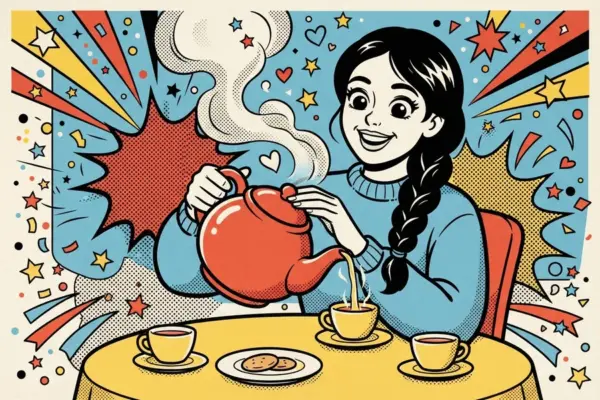
Teapot
«You pour the tea before anyone asks for it.»
The test is new — you are among the first hundred to take it.
A friend turns up an hour early, mid-chaos, and you find a clean cup anyway. Disagreements at your table tend to end with a shrug and a second biscuit. Going by your answers, the signs that people find you hard to get along with are minimal.
Getting along with you is easy, and that is a real strength. When friction does turn up, it tends to belong to the moment or to both of you equally.
Ease has a cost: you hand over more room than the moment calls for, and you look less closely at motives than you might. A calm picture here still leaves space for a rough stretch with one particular person; it describes a leaning, not every encounter. Keep pouring, with one eye on who is asking and why.

Lit Match
«You keep a small flame cupped in your hand.»
The test is new — you are among the first hundred to take it.
The group chat dithers over a restaurant, and your reply comes out sharper than you meant. Ten minutes later you have softened it with a joke. Going by your answers, the signs that people find you hard to get along with are mild and occasional.
Cooperation is still your base setting, and you correct course fast. The situation explains most of the friction. Your own part in it has started to show.
That part is now a visible thread in the mix, not just the weather around you. Is it a busy season or a settled habit? One round of answers can't say. The cleanup after a sharp reply is what keeps the room warm.

Bass Drum
«You set the tempo, and whoever is nearby hears it.»
The test is new — you are among the first hundred to take it.
At the family dinner you correct the seating plan, challenge the toast and argue over the dessert. Going by your answers, the signs that people find you hard to get along with are noticeable and turn up in several kinds of situations.
Friction is no longer confined to a couple of settings: it now surfaces across a wider circle, and your manner is part of it, though not the whole story.
Cooperation is still firmly yours; it now shares the stage with sharper habits. Whether this is a growing pattern or a rough stretch, one set of answers cannot settle, yet the level itself says something concrete. Own the beat, and pick the moments to play softly.

Megaphone
«You make yourself heard, and the room knows it.»
The test is new — you are among the first hundred to take it.
When a plan changes at the last minute, you take charge: new schedule, new roles, final say. Going by your answers, the signs that people find you hard to get along with are pronounced and persistent.
You are forceful and self-assured: you say what you need and you pursue it. Across situations your own style is the more constant factor, which does not mean you caused every conflict.
The bill for that drive lands on cooperation, trust and other people's ease, because the force that keeps you from being moved also keeps others from meeting you halfway. One set of answers cannot show how settled the pattern is, so spend your volume where it buys something.
About this test
How this test works
The test draws on what personality researchers describe as the opposite pole of agreeableness. Instead of one general trait called difficulty, it looks at separate tendencies: coldness toward other people's pain, superiority, a short fuse, suspicion, calculated influence, a need for control and a pull toward risk. The scenes cover these seven areas and copy no existing questionnaire. For background, see this reference entry on agreeableness.
The result shows how far a respondent's report points to a way of dealing with people that others may find hard to get along with. Warmth, cooperation and self-control sit at one end, their opposites at the other. The outcome is a position on a single scale, not a type or a label.
Answers capture how a person sees their own habits at one moment, not behaviour observed over time; an outside observer might describe the same person differently.
Two of the seven areas, distrust and the pull toward risk, rest on a single primary source instead of on agreement among several independent studies. That marks the edge of what the research supports; the test itself is not at fault.
The scale also says nothing about why a person is the way they are, or whether a trait is fixed.
This is a tool for self-observation, not for diagnosis. It neither confirms nor excludes a personality disorder; whether a pattern is steady and strong enough to matter clinically is a question for a qualified specialist working with far wider methods than a short questionnaire.
Frequently asked questions
Should I try a difficult person test?
It can work as a quick check if you are curious how your own manner comes across when things get tense. Treat it as a look at your habits out of interest, not as a reaction to a problem.
What is the difficult person test, and is it worth your time?
It is a short run of everyday scenes about disagreement, trust, control and risk, and it takes about six minutes. At the end you get a level on a scale showing how easy your usual manner is to get along with.
Am I a difficult person?
The test does not sort anyone into a difficult group or an easy one. Near the lower end of the scale, friction is more likely to come from circumstances or from both sides; further up, your own manner explains more of it.
Where does this test come from, and how reliable is it?
The scenes were written for this test, and the areas they cover come from published work on how people differ in agreeableness. Because it records your own view of yourself, a short self-report gives a rough reading rather than a precise measurement.
What exactly does it measure?
In everyday terms, it looks at whether your usual manner makes life easy or tiring for the people around you: how you respond to their feelings, disagreements, requests and joint decisions.
Sources
- Sleep, C. E., Crowe, M. L., Carter, N. T., Lynam, D. R., & Miller, J. D. (2021). Uncovering the structure of antagonism. Personality Disorders: Theory, Research, and Treatment, 12(4), 300–311. doi:10.1037/per0000416.
- Crowe, M. L., Lynam, D. R., & Miller, J. D. (2018). Uncovering the structure of agreeableness from self-report measures. Journal of Personality, 86(5), 771–787. doi:10.1111/jopy.12358.
- Wright, A. G. C. (2019). Antagonism from the perspective of interpersonal theory. In J. D. Miller & D. R. Lynam (Eds.), The Handbook of Antagonism (pp. 155–170). Academic Press. doi:10.1016/B978-0-12-814627-9.00011-6
- Costa, P. T., Jr., & McCrae, R. R. (1992). Revised NEO Personality Inventory (NEO-PI-R) and NEO Five-Factor Inventory (NEO-FFI) professional manual. Psychological Assessment Resources.
Three more tests on the same theme



Breakdown
There's a reason you answer the way you do
Most tests show you a slice of who you are. This one gets to the core: the classic 16-type personality test that goes back to Carl Jung, rebuilt from the ground up and way more accurate. It takes ten minutes, you only ever do it once — and you walk away with an answer most people never quite figure out: why you are the way you are. Why some people just get you, and why with others it's complicated. And that answer won't change: your type is yours for life.
Take the free testHow you compare
The test is new — you are among the first hundred to take it.
Three more tests on the same theme
About this test
How this test works
The test draws on what personality researchers describe as the opposite pole of agreeableness. Instead of one general trait called difficulty, it looks at separate tendencies: coldness toward other people's pain, superiority, a short fuse, suspicion, calculated influence, a need for control and a pull toward risk. The scenes cover these seven areas and copy no existing questionnaire. For background, see this reference entry on agreeableness.
The result shows how far a respondent's report points to a way of dealing with people that others may find hard to get along with. Warmth, cooperation and self-control sit at one end, their opposites at the other. The outcome is a position on a single scale, not a type or a label.
Answers capture how a person sees their own habits at one moment, not behaviour observed over time; an outside observer might describe the same person differently.
Two of the seven areas, distrust and the pull toward risk, rest on a single primary source instead of on agreement among several independent studies. That marks the edge of what the research supports; the test itself is not at fault.
The scale also says nothing about why a person is the way they are, or whether a trait is fixed.
This is a tool for self-observation, not for diagnosis. It neither confirms nor excludes a personality disorder; whether a pattern is steady and strong enough to matter clinically is a question for a qualified specialist working with far wider methods than a short questionnaire.
Frequently asked questions
Should I try a difficult person test?
It can work as a quick check if you are curious how your own manner comes across when things get tense. Treat it as a look at your habits out of interest, not as a reaction to a problem.
What is the difficult person test, and is it worth your time?
It is a short run of everyday scenes about disagreement, trust, control and risk, and it takes about six minutes. At the end you get a level on a scale showing how easy your usual manner is to get along with.
Am I a difficult person?
The test does not sort anyone into a difficult group or an easy one. Near the lower end of the scale, friction is more likely to come from circumstances or from both sides; further up, your own manner explains more of it.
Where does this test come from, and how reliable is it?
The scenes were written for this test, and the areas they cover come from published work on how people differ in agreeableness. Because it records your own view of yourself, a short self-report gives a rough reading rather than a precise measurement.
What exactly does it measure?
In everyday terms, it looks at whether your usual manner makes life easy or tiring for the people around you: how you respond to their feelings, disagreements, requests and joint decisions.
Sources
- Sleep, C. E., Crowe, M. L., Carter, N. T., Lynam, D. R., & Miller, J. D. (2021). Uncovering the structure of antagonism. Personality Disorders: Theory, Research, and Treatment, 12(4), 300–311. doi:10.1037/per0000416.
- Crowe, M. L., Lynam, D. R., & Miller, J. D. (2018). Uncovering the structure of agreeableness from self-report measures. Journal of Personality, 86(5), 771–787. doi:10.1111/jopy.12358.
- Wright, A. G. C. (2019). Antagonism from the perspective of interpersonal theory. In J. D. Miller & D. R. Lynam (Eds.), The Handbook of Antagonism (pp. 155–170). Academic Press. doi:10.1016/B978-0-12-814627-9.00011-6
- Costa, P. T., Jr., & McCrae, R. R. (1992). Revised NEO Personality Inventory (NEO-PI-R) and NEO Five-Factor Inventory (NEO-FFI) professional manual. Psychological Assessment Resources.
