
Social Anxiety Test Online
You are about to walk into a room of people you barely know. What does your mind do first? In about four minutes, everyday scenes lead to a picture, not a score, of how strongly signs of social anxiety appear in your answers. It is a self-report snapshot, and the topic deserves a straight, honest read.
No sign-up. Your result right away.

Open Skylight
«You walk into a room, and it is simply a room.»
The test is new — you are among the first hundred to take it.
You ask the barista how her day is going, tell a story at a dinner full of new faces and forget it before dessert. Your answers hold almost no rehearsing, hiding or replaying. At this level, signs of social anxiety in your answers are barely visible.
Ordinary social moments cost you nothing extra: no scripts to prepare, no long review afterward. This result sits just as well with a devoted introvert who loves a quiet evening, an extrovert, or anyone in between, because the test asks about fear and avoidance, not about how much company you want.
How much company you enjoy sits outside this test, so nothing in these scenes assumed an answer.

Porch Light
«You handle the day easily, and a few moments take extra work.»
The test is new — you are among the first hundred to take it.
You chat with colleagues all week without a thought, then draft three versions of an opening line for one meeting with strangers and replay it in the car on the way home. At this level, signs of social anxiety in your answers appear in episodes, in particular situations.
Most everyday contact costs you nothing beyond the contact itself. A few situations cost more: extra preparing, a stretch of watching yourself mid-conversation, a longer replay afterward. From outside, none of that shows.
Is this a passing stretch or a settled pattern? A single snapshot cannot say, and it does not pretend to. Your answers do draw a clear map of the spots where life asks a little more of you.

Table Lamp
«You stand right in the middle, and the room decides the rest.»
The test is new — you are among the first hundred to take it.
You enjoy a birthday dinner with friends of friends, then type out the first line of a call to the city office. Some signs are there, some are missing. At this level, signs of social anxiety in your answers sit right in the middle, in a mixed picture.
How strongly they show depends clearly on the situation, so this is a truly mixed picture and not a vague in-between. A few different answers would have pushed you either way, and you stand on the exact spot where that can happen.
It also does not shrink what this feels like. The moments that cost you something are real, even on the days the next ones cost nothing. Mixed is a fair description of what you described.

Fireplace Glow
«You get through the day, and the day charges a fee.»
The test is new — you are among the first hundred to take it.
You go to the team drinks, rehearse your lines on the way and keep a quiet watch on your voice all evening. The invitation to lead the project gets a trimmed-down yes. At this level, signs of social anxiety in your answers show up often, in most fitting situations.
Day to day you manage, and that is a real strength. The cost shows in your decisions: chances taken in a cut-down form or put off, and a discomfort that familiarity does not wear away. Talking this over with a professional is a reasonable, ordinary next step, and the where-to-turn link in the methodology is a calm place to begin.
The effort you put in is real, and so is what it costs.
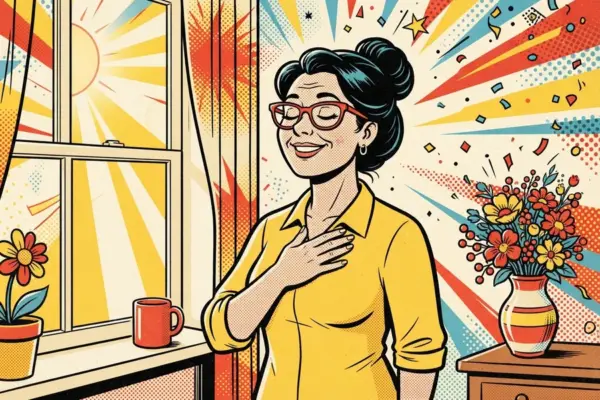
Paper Lantern
«Whatever you look like from outside, the work happens inside.»
The test is new — you are among the first hundred to take it.
You pick your seat in advance, check your voice through your first sentence and file each slip for the drive home. You may talk much or little; the effort is the same. At this level, signs of social anxiety in your answers are strong and clearly shape everyday life.
What defines this result is the mechanism, not the mood in the room: fear of being judged, a body you keep watch on, supports you lean on, replays that run for days and wanted chances turned down.
From outside it takes many forms, including a cheerful, talkative one. Talking this over with a professional is a reasonable, ordinary step, and the where-to-turn link in the methodology says so calmly. Strong signs deserve a proper conversation, and your answers are a fair place to start.
About this test
How this test works
The test is a self-report built on patterns that gather around social settings and are well described in psychology. It asks how present they are in your everyday life: replaying events before and after they happen, a body that gets keyed up while others watch, avoidance and private supports for getting through, and worry about being judged. A fifth thread covers persistence and cost: whether the pattern softens as places and people become familiar, how many settings it spans and whether it shapes your decisions. The questions are original and rest on no named questionnaire.
You get a picture of how strongly these signs appear in your answers. It says nothing about how long a pattern has been present, how heavy it is clinically, or whether a diagnosis fits.
The scale has no clinical calibration, and the borders between results are product choices, not clinical thresholds. Other explanations for the same experiences stay open. It is a single sitting, without the account of lasting pattern and life impact that a specialist builds. For a general overview see the NIMH guide to social anxiety beyond shyness, and for where and when to seek help see the NHS page on social anxiety.
This test is not a diagnostic instrument and does not replace a specialist. A diagnosis comes from a qualified professional, after a conversation about your history.
Frequently asked questions
Shy or socially anxious: what sets the two apart?
Social anxiety is driven by fear of being judged. It comes with a keyed-up body, avoidance or reliance on private tricks, and long replays of conversations, and the discomfort does not always soften with familiarity. Shyness is a temperament: some hesitation in new situations, usually softening as people become familiar. The two can look alike from outside, which is why this test asks about the fear and what it leads you to do.
Is this an introversion test?
No. Introversion describes how much quiet time and how little company a person prefers, and the test does not touch it. Every scene here concerns fear, a keyed-up body, avoidance or replaying. You can land on the lowest level and still be a devoted introvert, or land high and be talkative and sociable.
How can I tell whether what I notice in myself is social anxiety?
The test gives you one honest piece of the answer: a level of signs in your own responses, from barely visible to strong. It cannot say whether your experience fits any clinical description. If the result sounds like your life, or the pattern costs you things you want, a conversation with a doctor or therapist is the way to learn more.
Can an online quiz say whether I have social anxiety?
No. A short questionnaire records what you report about one stretch of your life. A diagnosis needs a qualified health professional, who asks about your history, learns how long and how widely the pattern has been present and weighs other explanations. For a calm starting point on where to turn, use the second link in the methodology.
Sources
- Rapee, R. M., & Heimberg, R. G. (1997). A cognitive-behavioral model of anxiety in social phobia. Behaviour Research and Therapy, 35(8), 741–756. doi:10.1016/S0005-7967(97)00022-3.
- Clark, D. M., & Wells, A. (1995). A Cognitive Model of Social Phobia. In R. G. Heimberg, M. R. Liebowitz, D. A. Hope, & F. R. Schneier (Eds.), Social Phobia: Diagnosis, Assessment, and Treatment (pp. 69–93). Guilford Press.
- Kashdan, T. B., & McKnight, P. E. (2010). The Darker Side of Social Anxiety. Current Directions in Psychological Science, 19(1), 47–50. doi:10.1177/0963721409359280.
- Leary, M. R. (1983). A brief version of the Fear of Negative Evaluation Scale. Personality and Social Psychology Bulletin, 9(3), 371–375. doi:10.1177/0146167283093007.
Three more tests on the same theme


Breakdown
There's a reason you answer the way you do
Most tests show you a slice of who you are. This one gets to the core: the classic 16-type personality test that goes back to Carl Jung, rebuilt from the ground up and way more accurate. It takes ten minutes, you only ever do it once — and you walk away with an answer most people never quite figure out: why you are the way you are. Why some people just get you, and why with others it's complicated. And that answer won't change: your type is yours for life.
Take the free testHow you compare
The test is new — you are among the first hundred to take it.
Three more tests on the same theme
About this test
How this test works
The test is a self-report built on patterns that gather around social settings and are well described in psychology. It asks how present they are in your everyday life: replaying events before and after they happen, a body that gets keyed up while others watch, avoidance and private supports for getting through, and worry about being judged. A fifth thread covers persistence and cost: whether the pattern softens as places and people become familiar, how many settings it spans and whether it shapes your decisions. The questions are original and rest on no named questionnaire.
You get a picture of how strongly these signs appear in your answers. It says nothing about how long a pattern has been present, how heavy it is clinically, or whether a diagnosis fits.
The scale has no clinical calibration, and the borders between results are product choices, not clinical thresholds. Other explanations for the same experiences stay open. It is a single sitting, without the account of lasting pattern and life impact that a specialist builds. For a general overview see the NIMH guide to social anxiety beyond shyness, and for where and when to seek help see the NHS page on social anxiety.
This test is not a diagnostic instrument and does not replace a specialist. A diagnosis comes from a qualified professional, after a conversation about your history.
Frequently asked questions
Shy or socially anxious: what sets the two apart?
Social anxiety is driven by fear of being judged. It comes with a keyed-up body, avoidance or reliance on private tricks, and long replays of conversations, and the discomfort does not always soften with familiarity. Shyness is a temperament: some hesitation in new situations, usually softening as people become familiar. The two can look alike from outside, which is why this test asks about the fear and what it leads you to do.
Is this an introversion test?
No. Introversion describes how much quiet time and how little company a person prefers, and the test does not touch it. Every scene here concerns fear, a keyed-up body, avoidance or replaying. You can land on the lowest level and still be a devoted introvert, or land high and be talkative and sociable.
How can I tell whether what I notice in myself is social anxiety?
The test gives you one honest piece of the answer: a level of signs in your own responses, from barely visible to strong. It cannot say whether your experience fits any clinical description. If the result sounds like your life, or the pattern costs you things you want, a conversation with a doctor or therapist is the way to learn more.
Can an online quiz say whether I have social anxiety?
No. A short questionnaire records what you report about one stretch of your life. A diagnosis needs a qualified health professional, who asks about your history, learns how long and how widely the pattern has been present and weighs other explanations. For a calm starting point on where to turn, use the second link in the methodology.
Sources
- Rapee, R. M., & Heimberg, R. G. (1997). A cognitive-behavioral model of anxiety in social phobia. Behaviour Research and Therapy, 35(8), 741–756. doi:10.1016/S0005-7967(97)00022-3.
- Clark, D. M., & Wells, A. (1995). A Cognitive Model of Social Phobia. In R. G. Heimberg, M. R. Liebowitz, D. A. Hope, & F. R. Schneier (Eds.), Social Phobia: Diagnosis, Assessment, and Treatment (pp. 69–93). Guilford Press.
- Kashdan, T. B., & McKnight, P. E. (2010). The Darker Side of Social Anxiety. Current Directions in Psychological Science, 19(1), 47–50. doi:10.1177/0963721409359280.
- Leary, M. R. (1983). A brief version of the Fear of Negative Evaluation Scale. Personality and Social Psychology Bulletin, 9(3), 371–375. doi:10.1177/0146167283093007.
