
Child Schizophrenia Test by Observation
Has something in the child’s behaviour made you look twice? In about four minutes, you answer with what you have personally seen and heard, and you get back a picture of your own observations, not a score. It is a serious subject, so take that picture as a way to put your thinking in order, never as an answer about the child.
No sign-up. Your result right away.
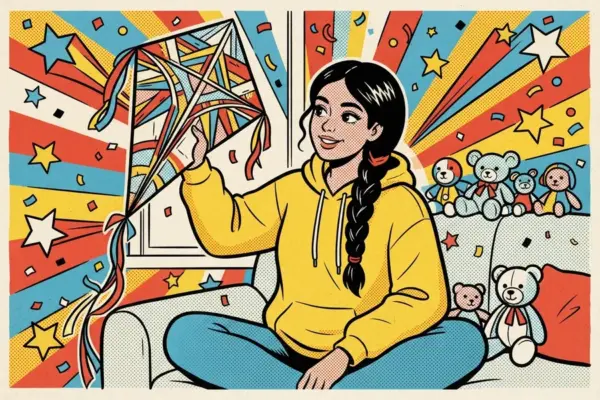
Paper Kite
«You noticed a few things, and none of them form a pattern.»
The test is new — you are among the first hundred to take it.
Bedtime, and the child whispers to a toy, then asks for the light to stay on. By breakfast a long story about a night visitor is told with total conviction. You have seen scraps like these, and they stay scattered. What you describe sits comfortably inside ordinary childhood.
A low reading doesn't mean nothing about the child deserves everyday attention. It means only that none of what you describe points toward the rare condition this test is named for. These are one adult's recent sightings, a snapshot, not a full portrait.
Imaginary friends, bedtime chatter and big invented stories are good company for a childhood, and your list reads like exactly that.
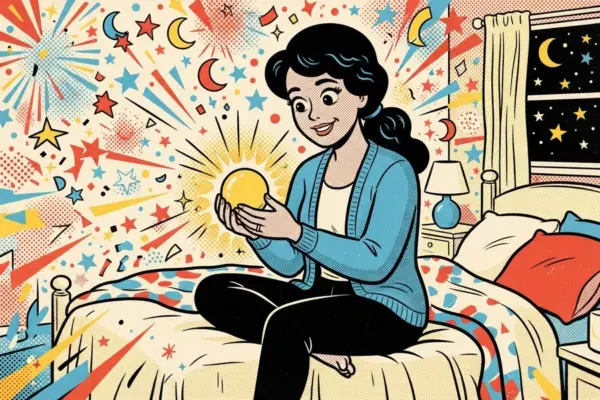
Night Light
«You noticed some things more than once, scattered and uneven.»
The test is new — you are among the first hundred to take it.
The landing light stays on, and a monster story gets told in full detail. Days apart, the child talks quietly to the wardrobe while getting ready for school. What you describe still sits mostly inside ordinary childhood.
Little moments like these crop up in plenty of childhoods and tend to fade as they came. At this level nothing calls for you to reach for the rarest explanation on the shelf.
Whether these moments hang around one rough stretch, a hectic week or a new classroom, is not something your answers can show. Ordinary explanations still lead at this level.
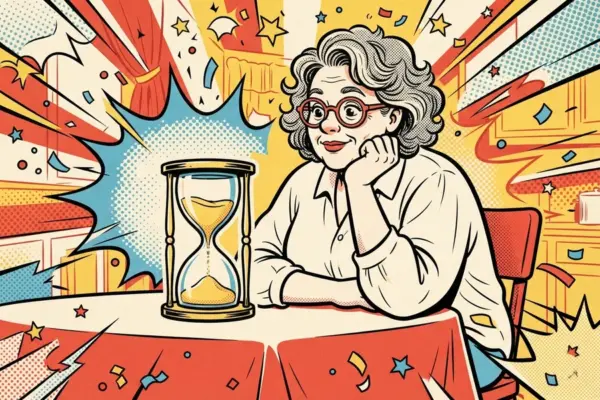
Hourglass
«You've spotted things that stand out, but no picture yet.»
The test is new — you are among the first hundred to take it.
At the dinner table the child breaks off a sentence halfway and looks puzzled when you wait for the end. What you describe holds a couple of things that stand out, without adding up to a clear picture yet.
A handful of moments like this, spread across school, home and friends, makes your list a scatter, not a shift in the child's whole manner.
Whether they have been there all along or turned up lately is a gap in what you can see. For now this reads as variation. A few open points remain.

Magnifying Glass
«You've looked closely, and the same pattern shows up in several places.»
The test is new — you are among the first hundred to take it.
At breakfast a door bangs and the child flinches hard, then answers your question with words that don't fit it. What you describe forms a pattern across several areas, with no clear change from how the child used to be.
Your list is dense, and density alone tells you little. What stays open is whether the child has drifted from who they were before and whether a reliable habit has gone quiet. Nothing here calls for alarm.
Out of frame, and beyond your view: the child's own account, and the fuller picture an assessment assembles. A long list is still only a list.

Windowsill Lighthouse
«You've watched something change, and it has held steady.»
The test is new — you are among the first hundred to take it.
The child who once begged to visit friends turns down every invitation, and the morning rush now needs you standing right there. What you describe includes a clear, lasting shift away from who the child was before, worth raising with the child's doctor at the next appointment.
You're describing one adult's view, and the child's own voice isn't in it.
What you saw is yours to put into words, plainly and without drama.
About this test
How this test works
This test follows research that asks an adult who knows a child to report what they have personally seen and heard. It has honest limits: you see the outside of a child's days, not the inside.
The rare condition in the test's name affects roughly 1 in 10,000 children, beginning before age 13. About 1 in 6 children aged 9 to 12 report psychosis-like experiences, and most pass by themselves. A test can state this context, not weigh it.
It measures how far your observations touch five areas: a shift from the child's usual self, hard-to-follow speech, unusual wariness, accounts of unusual experiences, a lost skill or habit. Not covered: the child's own inner experience, whether what you saw is the rare condition or a passing phase, the child's background, diagnostic criteria and treatment.
HealthHub Singapore speaks to adults beside a child or teenager. NIMH is a general psychosis overview, not written with a child in mind, so read it as background.
Treat this as a way of organising what you saw, not a diagnostic tool or an assessment of the child. It cannot tell you whether a child has schizophrenia or another psychotic disorder. That judgement belongs to a trained clinician who draws on several people and sees the child in person. Your result mirrors what you have lately watched; even the top result is no alarm, and even the bottom one doesn't say nothing deserves attention, only that none of it points toward the rare condition.
Frequently asked questions
Can this test tell if a child has schizophrenia?
No. A diagnosis comes from a specialist who spends time with the child, talks to the people around them and looks at the whole picture over several appointments. One adult working through everyday scenes can't replace that, and this page only gathers what you have seen yourself.
How rare is childhood schizophrenia?
It is rare: estimates put it at around 1 in 10,000 children when it starts before the age of 13. Things that look similar from the outside are far likelier to turn up. Roughly 1 in 6 children aged 9 to 12 report some psychosis-like experience, and most of these fade without anyone stepping in.
Is it normal for a child to have an imaginary friend or talk to themselves?
Yes. Invisible companions turn up often between toddlerhood and the early school years, and chatting aloud during play is something most children go through. On their own, neither points to anything worrying, which is why neither is what this test is built around.
What is worth mentioning to a child's doctor?
There is no fixed checklist. The useful thing to notice is change from the child's own baseline: a friendship pattern, a run of low energy or a flat mood that stayed that way, or a skill that was solid and went missing. Experiences described in layered or upsetting detail, or with several voices, stand apart from brief, sleep-time ones or pretend play the child is running. A routine visit is an ordinary place to bring it up.
How is childhood schizophrenia diagnosed?
A specialist starts by excluding other explanations, then builds on long conversations with the child and those close to them and a look at development and family background. No single test settles it. Specialists work from formal manuals such as DSM-5 and ICD-11.
Sources
- Kim, S. J. et al. Differentiating Childhood-Onset Schizophrenia From Other Childhood Disorders. PMC8958114.
- Kelleher, I., Connor, D., Clarke, M. C., Devlin, N., Harley, M., & Cannon, M. (2012). Prevalence of psychotic symptoms in childhood and adolescence: a systematic review and meta-analysis of population-based studies. Psychological Medicine, 42(9), 1857–1863. doi:10.1017/S0033291711002960.
- Dominguez, M.-G., & Garralda, M. E. (2016). Assessing and managing hallucinations in children and adolescents. BJPsych Advances, 22(6), 380–390. doi:10.1192/apt.bp.115.014738.
- Hamasaki, Y. et al. (2021). Testing the clinical application of the child psychosis-risk screening system (CPSS). European Psychiatry, 64(Suppl 1), S638. doi:10.1192/j.eurpsy.2021.1694.
Three more tests on the same theme

Breakdown
There's a reason you answer the way you do
Most tests show you a slice of who you are. This one gets to the core: the classic 16-type personality test that goes back to Carl Jung, rebuilt from the ground up and way more accurate. It takes ten minutes, you only ever do it once — and you walk away with an answer most people never quite figure out: why you are the way you are. Why some people just get you, and why with others it's complicated. And that answer won't change: your type is yours for life.
Take the free testHow you compare
The test is new — you are among the first hundred to take it.
Three more tests on the same theme
About this test
How this test works
This test follows research that asks an adult who knows a child to report what they have personally seen and heard. It has honest limits: you see the outside of a child's days, not the inside.
The rare condition in the test's name affects roughly 1 in 10,000 children, beginning before age 13. About 1 in 6 children aged 9 to 12 report psychosis-like experiences, and most pass by themselves. A test can state this context, not weigh it.
It measures how far your observations touch five areas: a shift from the child's usual self, hard-to-follow speech, unusual wariness, accounts of unusual experiences, a lost skill or habit. Not covered: the child's own inner experience, whether what you saw is the rare condition or a passing phase, the child's background, diagnostic criteria and treatment.
HealthHub Singapore speaks to adults beside a child or teenager. NIMH is a general psychosis overview, not written with a child in mind, so read it as background.
Treat this as a way of organising what you saw, not a diagnostic tool or an assessment of the child. It cannot tell you whether a child has schizophrenia or another psychotic disorder. That judgement belongs to a trained clinician who draws on several people and sees the child in person. Your result mirrors what you have lately watched; even the top result is no alarm, and even the bottom one doesn't say nothing deserves attention, only that none of it points toward the rare condition.
Frequently asked questions
Can this test tell if a child has schizophrenia?
No. A diagnosis comes from a specialist who spends time with the child, talks to the people around them and looks at the whole picture over several appointments. One adult working through everyday scenes can't replace that, and this page only gathers what you have seen yourself.
How rare is childhood schizophrenia?
It is rare: estimates put it at around 1 in 10,000 children when it starts before the age of 13. Things that look similar from the outside are far likelier to turn up. Roughly 1 in 6 children aged 9 to 12 report some psychosis-like experience, and most of these fade without anyone stepping in.
Is it normal for a child to have an imaginary friend or talk to themselves?
Yes. Invisible companions turn up often between toddlerhood and the early school years, and chatting aloud during play is something most children go through. On their own, neither points to anything worrying, which is why neither is what this test is built around.
What is worth mentioning to a child's doctor?
There is no fixed checklist. The useful thing to notice is change from the child's own baseline: a friendship pattern, a run of low energy or a flat mood that stayed that way, or a skill that was solid and went missing. Experiences described in layered or upsetting detail, or with several voices, stand apart from brief, sleep-time ones or pretend play the child is running. A routine visit is an ordinary place to bring it up.
How is childhood schizophrenia diagnosed?
A specialist starts by excluding other explanations, then builds on long conversations with the child and those close to them and a look at development and family background. No single test settles it. Specialists work from formal manuals such as DSM-5 and ICD-11.
Sources
- Kim, S. J. et al. Differentiating Childhood-Onset Schizophrenia From Other Childhood Disorders. PMC8958114.
- Kelleher, I., Connor, D., Clarke, M. C., Devlin, N., Harley, M., & Cannon, M. (2012). Prevalence of psychotic symptoms in childhood and adolescence: a systematic review and meta-analysis of population-based studies. Psychological Medicine, 42(9), 1857–1863. doi:10.1017/S0033291711002960.
- Dominguez, M.-G., & Garralda, M. E. (2016). Assessing and managing hallucinations in children and adolescents. BJPsych Advances, 22(6), 380–390. doi:10.1192/apt.bp.115.014738.
- Hamasaki, Y. et al. (2021). Testing the clinical application of the child psychosis-risk screening system (CPSS). European Psychiatry, 64(Suppl 1), S638. doi:10.1192/j.eurpsy.2021.1694.
