
Friend Check-In Quiz
Your friend goes quiet or lights up your phone with jokes, and you wonder whether the word toxic fits. Pick the scene closest to what you’ve seen, and in about five minutes you get an image of what you’ve noticed and how it sits with you, not a score. Your friend hasn’t taken this, so it shows your side only, and it’s a way to look more closely, not to settle anything.
No sign-up. Your result right away.

Clinking Mugs
«What you've noticed sounds like the ordinary bumps of a real friendship.»
The test is new — you are among the first hundred to take it.
You argue over who books the cabin, voices go up, and then one ridiculous joke lands and you are both laughing and picking a date. It stung for a minute. By evening you are trading memes, and you still wonder if the sting meant something.
Arguing about plans and money says little on its own. What matters more is whether contempt shows up, and in your scenes the arguing stays about the issue. The word toxic would read more into this than is there. Small stings are the price of a friendship this easy: they get skipped and pile up quietly. And a recent quarrel could be tinting how these scenes look right now.
Name the specific moment that stung, because that gets you further than any label.

Honey and Lemon
«What you've noticed holds real warmth and real weight, side by side.»
The test is new — you are among the first hundred to take it.
You laugh through the whole dinner, and by morning there is a weight you can't name. You lie there with your phone, type a thank-you, delete it, type a different one. Which of the two feelings is the real one?
Both are. Warmth and strain in one friendship is a picture of its own, not a polite name for a bad friendship and not proof that the word toxic applies. Keeping a guard half up and half down is tiring in its own way. What you can't see from here: which moments pull each way, and whether the balance tipped lately.
Which evenings taste like honey to you, and which like lemon? That sorting is where you start.

Little Scales
«What you've noticed points to a balance or closeness that has shifted.»
The test is new — you are among the first hundred to take it.
You pick the date and the place, and you send the reminder. Your friend answers two days later with 'sounds good' and arrives warm and glad to see you. The evening is lovely. The planning, though, rests on your hands, and you know it.
This is less about one loud event and more about a quiet tilt in who writes and who plans, and when one side gives more than it gets, you feel it. Nothing here points to bad intent. Being the dependable one has a flip side, though: your own needs go quiet, and how your friend would tell the same months stays out of frame.
The scale is telling you something. You're allowed to read it.
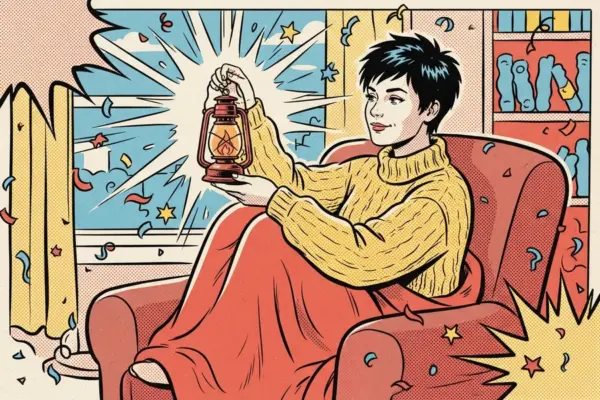
Old Lantern
«What you've noticed contains a pattern that deserves to be taken seriously.»
The test is new — you are among the first hundred to take it.
Over dinner, a mutual friend mentions a detail you told only your friend. You go quiet, and then your phone does too: the next two messages you send get no reply. Each piece has an innocent explanation. Together they have a shape.
That shape is behavior aimed at you, and it asks for a steady look, whatever you end up calling it. Seeing it clearly brings its own weight, since affection and wariness now share one room. Your friend's own telling isn't in the frame, nor is whether this runs back years or sits in one hard season. If you'd like to sort this out or find support, the methodology section below suggests where to start.
Whatever comes next, that call belongs to you alone.
About this test
How this test works
People use the word toxic for different things: a loud argument, a cooled friendship, someone who leaves you tired, a run of deliberate unkindness. One label for all of it makes ordinary things look alarming and can bury the one case that deserves attention. This test sorts what you describe into four explanations rather than one verdict: everyday friction, mixed feelings, a shifting balance or closeness, and a concerning pattern of behavior aimed at you.
It reflects only what a single reader reports about a single friendship on a single day, unchecked. Your friend didn't take the test, and their telling isn't in it. Anything about you beyond what you saw lies outside its reach, and so does whether the friendship should carry on or whether anything was meant to hurt.
It doesn't borrow the vocabulary of severe harm that exists for couples and households. The research behind that language centers on those bonds, and nothing comparable exists for friends, so the strongest reading here stops at behavior that merits attention, never a diagnosis or a ruling.
For a calm view of disagreements in close relationships, friendships included, see this guide to keeping relationships healthy. If your picture landed on the last result and you want to talk it through, this directory of where to find help with how you're coping is a place to start. It covers support in general rather than friendship, and isn't a specialist service.
Frequently asked questions
Why do I feel drained after seeing my friend?
Being glad to see someone and tired afterward can come together in one friendship. This mix is known as ambivalence, and it is a recognized kind of closeness rather than proof that something is wrong. The quiz gives it a result of its own and asks how you feel in the day or two after you meet.
Can a toxic friend quiz tell me whether my friend is toxic?
No. Your friend didn't answer anything, and a quiz can't settle facts about someone who isn't in the room. This one gives what you saw and felt back to you as a picture. It takes about five minutes and twenty everyday scenes, and it passes no verdict on anyone.
Is this friendship toxic, or am I just too sensitive?
The quiz doesn't decide that for you. It describes what you've noticed and how you feel around this friend, and a sense that things are off deserves a hearing, including when the cause turns out to be mundane.
How do I know if a friendship is one-sided?
One-sidedness is its own matter, separate from toxicity. It concerns who reaches out and who gives support, and it says nothing about motive. Here it belongs to one explanation, a shifting balance, and shows up in the scenes about starting contact and about help moving in both directions.
What's the difference between a toxic friend and a bad friend?
Toxic isn't a defined category, and the word stretches over several different situations. Some are ordinary, like arguments or drifting apart. One is different: behavior aimed at you, such as being shut out or having a private story passed around. That is the only reading here that gets flagged as a serious sign.
Sources
- Haslam, N. (2016). Concept Creep: Psychology's Expanding Concepts of Harm and Pathology. Psychological Inquiry, 27(1), 1–17. doi:10.1080/1047840X.2016.1082418.
- Adams, R. E., & Laursen, B. (2007). The correlates of conflict: Disagreement is not necessarily detrimental. Journal of Family Psychology, 21(3), 445–458. doi:10.1037/0893-3200.21.3.445.
- Holt-Lunstad, J., & Uchino, B. N. (2019). Social Ambivalence and Disease (SAD): A Theoretical Model Aimed at Understanding the Health Implications of Ambivalent Relationships. Perspectives on Psychological Science, 14(6), 941–966. doi:10.1177/1745691619861392.
- Werner, N. E., & Crick, N. R. (1999). Relational aggression and social-psychological adjustment in a college sample. Journal of Abnormal Psychology, 108(4), 615–623. doi:10.1037/0021-843X.108.4.615.
Three more tests on the same theme



Breakdown
There's a reason you answer the way you do
Most tests show you a slice of who you are. This one gets to the core: the classic 16-type personality test that goes back to Carl Jung, rebuilt from the ground up and way more accurate. It takes ten minutes, you only ever do it once — and you walk away with an answer most people never quite figure out: why you are the way you are. Why some people just get you, and why with others it's complicated. And that answer won't change: your type is yours for life.
Take the free testHow you compare
The test is new — you are among the first hundred to take it.
Three more tests on the same theme
About this test
How this test works
People use the word toxic for different things: a loud argument, a cooled friendship, someone who leaves you tired, a run of deliberate unkindness. One label for all of it makes ordinary things look alarming and can bury the one case that deserves attention. This test sorts what you describe into four explanations rather than one verdict: everyday friction, mixed feelings, a shifting balance or closeness, and a concerning pattern of behavior aimed at you.
It reflects only what a single reader reports about a single friendship on a single day, unchecked. Your friend didn't take the test, and their telling isn't in it. Anything about you beyond what you saw lies outside its reach, and so does whether the friendship should carry on or whether anything was meant to hurt.
It doesn't borrow the vocabulary of severe harm that exists for couples and households. The research behind that language centers on those bonds, and nothing comparable exists for friends, so the strongest reading here stops at behavior that merits attention, never a diagnosis or a ruling.
For a calm view of disagreements in close relationships, friendships included, see this guide to keeping relationships healthy. If your picture landed on the last result and you want to talk it through, this directory of where to find help with how you're coping is a place to start. It covers support in general rather than friendship, and isn't a specialist service.
Frequently asked questions
Why do I feel drained after seeing my friend?
Being glad to see someone and tired afterward can come together in one friendship. This mix is known as ambivalence, and it is a recognized kind of closeness rather than proof that something is wrong. The quiz gives it a result of its own and asks how you feel in the day or two after you meet.
Can a toxic friend quiz tell me whether my friend is toxic?
No. Your friend didn't answer anything, and a quiz can't settle facts about someone who isn't in the room. This one gives what you saw and felt back to you as a picture. It takes about five minutes and twenty everyday scenes, and it passes no verdict on anyone.
Is this friendship toxic, or am I just too sensitive?
The quiz doesn't decide that for you. It describes what you've noticed and how you feel around this friend, and a sense that things are off deserves a hearing, including when the cause turns out to be mundane.
How do I know if a friendship is one-sided?
One-sidedness is its own matter, separate from toxicity. It concerns who reaches out and who gives support, and it says nothing about motive. Here it belongs to one explanation, a shifting balance, and shows up in the scenes about starting contact and about help moving in both directions.
What's the difference between a toxic friend and a bad friend?
Toxic isn't a defined category, and the word stretches over several different situations. Some are ordinary, like arguments or drifting apart. One is different: behavior aimed at you, such as being shut out or having a private story passed around. That is the only reading here that gets flagged as a serious sign.
Sources
- Haslam, N. (2016). Concept Creep: Psychology's Expanding Concepts of Harm and Pathology. Psychological Inquiry, 27(1), 1–17. doi:10.1080/1047840X.2016.1082418.
- Adams, R. E., & Laursen, B. (2007). The correlates of conflict: Disagreement is not necessarily detrimental. Journal of Family Psychology, 21(3), 445–458. doi:10.1037/0893-3200.21.3.445.
- Holt-Lunstad, J., & Uchino, B. N. (2019). Social Ambivalence and Disease (SAD): A Theoretical Model Aimed at Understanding the Health Implications of Ambivalent Relationships. Perspectives on Psychological Science, 14(6), 941–966. doi:10.1177/1745691619861392.
- Werner, N. E., & Crick, N. R. (1999). Relational aggression and social-psychological adjustment in a college sample. Journal of Abnormal Psychology, 108(4), 615–623. doi:10.1037/0021-843X.108.4.615.
