Online Emotional Intelligence Test
Someone says ‘I’m fine’ and you are already sure they are not. Or you take them at their word and move on. Which one are you? In about 7 minutes of everyday scenes you pick the answers that sound most like your own habits, and you get back a picture rather than a number: how you read other people, look after relationships, handle reactions and notice your own feelings. It is a playful self-portrait, made honestly, and not a clinical check.
No sign-up. Your result right away.

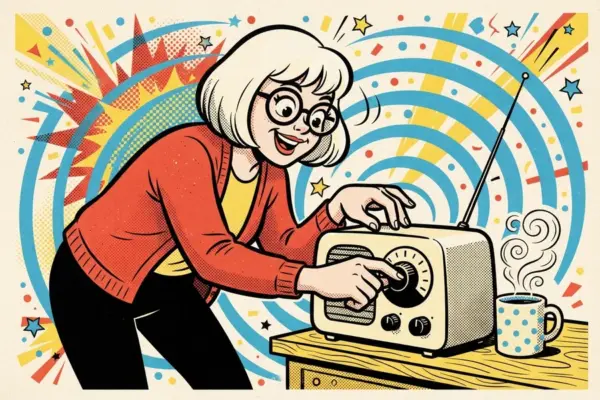
Pocket Radio
«You are tuning in, one station at a time.»
The test is new — you are among the first hundred to take it.
A friend goes quiet halfway through dinner and you finish your pasta before wondering why. On this scale that puts your habits at the quietest end for now. At bedtime your jaw is tight, and you could not say what the day felt like.
Think of it as today's reading and nothing grander: habits like these grow with attention, the way a small radio finds more stations once someone turns the dial. The bonus of a quiet dial is that very little drama reaches you.
Every good listener began with static, so leave your radio on.
Tuning Dial
«Your dial is on the right band, though a few stations crackle.»
The test is new — you are among the first hundred to take it.
A friend's smile looked thin at the party. These habits sit in the familiar middle of the scale: there, but not loud yet. On the walk home you wonder about it, and promise to ask next time.
That is where you stand this season, with room to move in both directions, and a dial between stations has its charm: you hear enough to know what you are missing.
Dials drift, and yours is no exception. It is a decent set, and it is yours to tune.

Hand Lantern
«You carry a lantern, and it lights more than your own feet.»
The test is new — you are among the first hundred to take it.
On the drive home your mood dips, and you name it by the second junction. Your answers put these habits well up the scale: developed, and often forceful. At the next table a silence lands and you notice the temperature drop.
This is a self-portrait, and it cannot tell you where the lantern actually helps. It is just as handy in a garden as on a mountain. The price of carrying one is that you pick up wobbles in rooms nobody asked you to handle.
Mind where you point it.

Lighthouse Beam
«Your lamp is on, and it turns without being asked.»
The test is new — you are among the first hundred to take it.
You name a room's mood before the coffee arrives. At the very top of this scale, these habits are on nearly all the time. At home you lay your own day out like a map: what you felt, when, and why.
Self-description is all this is. Your beam lights rescue boats and rocks alike, and brightness says nothing about what it is pointed at, or how it looks from the water.
Off duty, you still clock who is drooping at the dinner table. The lamp keeps turning, even when you would love a night without it.
About this test
How this test works
The test borrows from research that treats emotional intelligence as everyday habits: making sense of others, looking after relationships, handling your own reactions and noticing what you feel. Scenes draw on each area, and the answers add up on a single sliding scale. Most scenes describe a habit being there; about a quarter describe it missing, which stops answers drifting one way.
What you get is how you describe your habits at one moment: self-report, not a tested skill, with no agreed norm. People's ratings of their emotional skill and their performance match only loosely, and the tie to how lives turn out is slight. The test diagnoses nothing, says nothing about any condition, and copies no branded questionnaire. The same habits can be put to kind or selfish ends. Background: a public health overview and an encyclopedia entry on how the construct is modelled and criticised.
Frequently asked questions
What does an emotional intelligence test actually cover?
This one draws its 32 scenes evenly from four areas that researchers often separate: looking after relationships, making sense of others, handling your own reactions and noticing your own states. All of them feed one result, with no mini-scores per area, because the research itself treats the whole thing as a continuum.
How trustworthy is an online emotional intelligence test?
That depends on what they ask. A test where you rate yourself captures self-perception, and studies find that how people rate their emotional skill and how they perform on it match only loosely. This test is the self-rating kind, so read the result as a self-portrait of your habits, not as an exact measurement and not as an EQ figure.
Can you build up your emotional intelligence?
The habits behind this test, such as catching a mood early, pausing before you answer or checking in on a friend, are the kind people build with practice and attention. The test itself shows one snapshot and does not track change, so it cannot tell you how quickly things might shift for you.
Does emotional intelligence matter more than IQ?
That claim comes from a popular way of putting things rather than from one proven result, and this test does not repeat it. Studies find a modest link between how people describe their emotional habits and how life goes for them, which is far from a ranking of one over the other. The test forecasts nothing about your life.
Which result is a good one on an emotional intelligence test?
Researchers treat self-described emotional habits as a matter of degree and have set no cut-offs, so there is no pass mark to hit. You land at one spot on this test's scale, with a picture to go with it. Plenty of people describe themselves in the middle, and that is an ordinary place to be.
Sources
- Salovey, P., & Mayer, J. D. (1990). Emotional intelligence. Imagination, Cognition and Personality, 9(3), 185–211.
- Goleman, D. (1995). Emotional Intelligence: Why It Can Matter More Than IQ. Bantam Books.
- Petrides, K. V., & Furnham, A. (2001). Trait emotional intelligence: Psychometric investigation with reference to established trait taxonomies. European Journal of Personality, 15(6), 425–448.
Three more tests on the same theme

Breakdown
There's a reason you answer the way you do
Most tests show you a slice of who you are. This one gets to the core: the classic 16-type personality test that goes back to Carl Jung, rebuilt from the ground up and way more accurate. It takes ten minutes, you only ever do it once — and you walk away with an answer most people never quite figure out: why you are the way you are. Why some people just get you, and why with others it's complicated. And that answer won't change: your type is yours for life.
Take the free testHow you compare
The test is new — you are among the first hundred to take it.
Three more tests on the same theme
About this test
How this test works
The test borrows from research that treats emotional intelligence as everyday habits: making sense of others, looking after relationships, handling your own reactions and noticing what you feel. Scenes draw on each area, and the answers add up on a single sliding scale. Most scenes describe a habit being there; about a quarter describe it missing, which stops answers drifting one way.
What you get is how you describe your habits at one moment: self-report, not a tested skill, with no agreed norm. People's ratings of their emotional skill and their performance match only loosely, and the tie to how lives turn out is slight. The test diagnoses nothing, says nothing about any condition, and copies no branded questionnaire. The same habits can be put to kind or selfish ends. Background: a public health overview and an encyclopedia entry on how the construct is modelled and criticised.
Frequently asked questions
What does an emotional intelligence test actually cover?
This one draws its 32 scenes evenly from four areas that researchers often separate: looking after relationships, making sense of others, handling your own reactions and noticing your own states. All of them feed one result, with no mini-scores per area, because the research itself treats the whole thing as a continuum.
How trustworthy is an online emotional intelligence test?
That depends on what they ask. A test where you rate yourself captures self-perception, and studies find that how people rate their emotional skill and how they perform on it match only loosely. This test is the self-rating kind, so read the result as a self-portrait of your habits, not as an exact measurement and not as an EQ figure.
Can you build up your emotional intelligence?
The habits behind this test, such as catching a mood early, pausing before you answer or checking in on a friend, are the kind people build with practice and attention. The test itself shows one snapshot and does not track change, so it cannot tell you how quickly things might shift for you.
Does emotional intelligence matter more than IQ?
That claim comes from a popular way of putting things rather than from one proven result, and this test does not repeat it. Studies find a modest link between how people describe their emotional habits and how life goes for them, which is far from a ranking of one over the other. The test forecasts nothing about your life.
Which result is a good one on an emotional intelligence test?
Researchers treat self-described emotional habits as a matter of degree and have set no cut-offs, so there is no pass mark to hit. You land at one spot on this test's scale, with a picture to go with it. Plenty of people describe themselves in the middle, and that is an ordinary place to be.
Sources
- Salovey, P., & Mayer, J. D. (1990). Emotional intelligence. Imagination, Cognition and Personality, 9(3), 185–211.
- Goleman, D. (1995). Emotional Intelligence: Why It Can Matter More Than IQ. Bantam Books.
- Petrides, K. V., & Furnham, A. (2001). Trait emotional intelligence: Psychometric investigation with reference to established trait taxonomies. European Journal of Personality, 15(6), 425–448.
